When my phone rings at 7 a.m. on a Monday, I know it’s almost never a wrong number. This time, it’s a residential contractor who’d tried installing quartz countertops the previous weekend. “The slabs are cracking along the joints,” he said, frustration thick in his voice. “The store said it was ‘cut to size,’ but no one told me how much space I need between them. I lost two full slabs, and I’m three days behind on the job.” That call, plus a dozen similar ones in the last two years, made me realize: even with today’s quartz slab sizes being more standardized than ever, most installers and homeowners skip the tiny, science-backed detail that prevents most installation issues—joint spacing. Quartz Slab Sizes
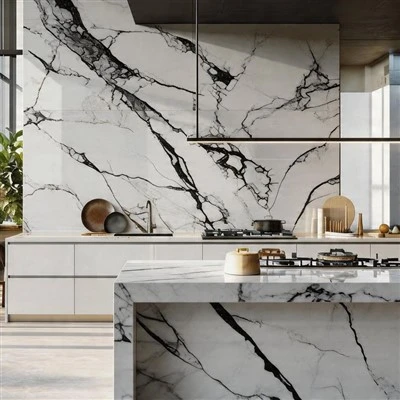
For 12 years, I’ve run a quartz slab sizes supply business out of a warehouse in Nashville, Tennessee, where we cut custom slabs for kitchen counters, bathroom vanities, and commercial wall cladding. We’ve shipped slabs as small as 30×60 inches for compact powder rooms and as large as 120×260 inches for high-end kitchen islands. Early on, I made the same mistake as that contractor: I assumed spacing was just a matter of “leave a little gap for caulk.” It’s not. Quartz is a engineered stone, a mix of 93% natural quartz crystals and 7% polymer resins, pigments, and binders. Those resins expand and contract with temperature swings, humidity changes, and even the weight of a sink or cooktop. Skip the right joint width, and you’re guaranteed cracks, loose seams, or even slabs shifting out of alignment within a year.
Let’s start with the basics: what’s the actual science behind the space between quartz slabs? Most natural stones have their own expansion rates (granite moves more than marble, for example), but quartz’s is unique because of the polymer matrix. According to stone industry standards from the Marble Institute of America (MIA), the recommended joint width for interior quartz installations is 1/8 inch (3.175 millimeters) for standard kitchen and bath countertops. Wait—some installers tell me they use 1/16 inch, or even zero? I’ll be straight: that’s a shortcut that will backfire. Even a 1/16 inch gap leaves almost no room for the 0.002 to 0.005 inches of thermal expansion quartz experiences in average indoor temperatures. In the summer, when a kitchen counter heats up from a oven hood or a sunny window, quartz slabs expand just enough to push against each other if the joint is too tight. Over time, that pressure causes stress cracks right along the seam, which are almost impossible to fix without replacing the entire slab.
But here’s where I see most people get confused: the recommended spacing isn’t one-size-fits-all. It shifts based on three big factors: slab size, installation location, and environmental conditions. Let’s break that down, since that’s why my team and I always include a spacing guide with every order of quartz slab sizes we ship.
First, slab dimensions. If you’re working with smaller quartz slabs—say, a 60×30 inch vanity top, which is one of our most popular standard sizes—you don’t need to deviate much from the 1/8 inch rule. Smaller slabs have less surface area, so their total expansion is minimal. But when you’re dealing with large-format slabs, like the 120×260 inch islands we supply for custom home builds, you have to add a little extra. Those large slabs can expand up to 0.01 inches along their length in warm conditions, so the MIA and our own internal testing recommend bumping joint width to 3/16 inch (4.76 millimeters) for slabs over 10 feet long. We learned this the hard way in 2019, when a architect ordered four extra-large island slabs and our installer used the standard 1/8 inch spacing. Three months later, two of the slabs had hairline cracks at the center seam. We worked with the installer to re-caulk and adjust spacing, but we also changed our own process: now, for any quartz slab sizes over 120 inches, we add a printed note on the packaging reminding installers to use 3/16 inch joints.
Second, installation location. It’s not just kitchen counters. If you’re installing quartz for a commercial wall cladding, or a bathroom counter in a humid climate, you need to adjust spacing too. Humidity affects quartz’s resin matrix much more than temperature does, because the polymers absorb moisture and swell slightly. For commercial installations, where indoor humidity can jump from 40% in winter to 70% in summer, we recommend 1/8 to 3/16 inch spacing depending on wall height. For outdoor quartz installations—yes, some people use quartz for outdoor kitchen counters!—you need to go even wider: 1/4 inch (6.35 millimeters). Outdoor quartz is designed to withstand UV rays, but extreme temperature swings (90-degree summer days to 20-degree winter nights) cause much more expansion than indoor settings. A customer in Austin, Texas, told us he tried installing a outdoor kitchen counter with 1/8 inch joints, and by the end of the first summer, the slabs had shifted so much that the sink didn’t fit right. He called us to re-order slabs, and we worked with him to adjust the spacing to 1/4 inch, which has held up for three years now.
Third, environmental conditions specific to your project. If you’re installing a counter in a house with poor ventilation, or a commercial space that runs industrial ovens nearby, you need to factor that in. We had a restaurant client in Chicago a few years back, their kitchen has a 10-foot quartz counter adjacent to three commercial fryers that run 12 hours a day. The constant heat meant the counter’s slabs expanded 25% more than a standard indoor installation. Our installer suggested using 1/4 inch joints there too, plus a flexible, high-temperature caulk instead of standard silicone. That’s another point: joint width only works if you pair it with the right material. A 1/8 inch gap with rigid grout will crack just as fast as a 1/16 inch gap with nothing. For quartz joints, we always recommend flexible urethane caulk, which can stretch and compress with the slab’s movement.
I know what some installers are thinking: “Why not just leave a big gap? That’s easier, right?” Let’s be clear: too much spacing looks messy. A 1/4 inch gap is noticeable on standard countertop, and if you leave more than that, it detracts from the clean, seamless look quartz is known for. The sweet spot is exactly matching the joint width to your slab and space, so it’s functional and aesthetically pleasing.
A common mistake I see homeowners make is trying to save money by using leftover slabs or smaller custom cuts without adjusting spacing. Last year, a DIY customer in Atlanta ordered three 30×60 inch vanity tops from us, all left over from a kitchen remodel. He tried to install them side by side on his master bath wall, leaving 1/16 inch gaps, and by the end of the first winter, the slabs had pushed the wall tile out of alignment. When he called us, I walked him through adjusting the spacing to 1/8 inch, and he fixed it in a weekend. He told me he’d assumed “custom quartz slab sizes” just meant cut to fit, not that they needed different spacing. That’s why we started including a one-page fact sheet with every order: for each quartz slab size, we list the recommended joint width based on use.
Now, let’s talk about how to actually measure and install those gaps correctly, because even the right measurement won’t help if you skip the prep. Installers often use a wooden spacer to set the gap, but wood absorbs humidity and shrinks or expands, which throws off the measurement. We recommend using plastic or metal spacers, which stay consistent in size. For small joints (1/8 inch), you can even use a quarter as a spacer—wait, let’s test that: a quarter is about 1/16 inch thick, so two quarters stacked make 1/8 inch, perfect. For larger 3/16 or 1/4 inch joints, you can use specialized U-shaped spacers designed for stone installations, which keep the gap consistent along the entire length of the seam.
Another thing: when you’re joining two quartz slabs, the edge of each slab should be straight, no chipping or uneven cuts. If you have a custom quartz slab size that has a rough cut edge, that can make the seam look uneven even if the spacing is right. That’s why our team uses water jet cutting for all custom slabs, which gives a precision edge within 0.005 inches, so the seam line is almost invisible. We’ve had customers tell us their quartz countertop seams look so good, no one can tell where one slab ends and the next begins— that’s the goal, and it all starts with getting the joint spacing right.
I get asked all the time: “Can I use a different spacing for my project?” The short answer is: only if you have a specific reason, and you check with a stone industry professional. We once had a customer who wanted to use 1/4 inch spacing for a small 60×30 inch vanity, because she wanted to add inlays between the slabs. That’s a perfect case where deviating from the standard rule works—just make sure the joints are wide enough for your inlay, and use a caulk that matches the quartz color so it doesn’t look out of place.
Over the years, I’ve learned that most installation problems with quartz slabs aren’t from the quality of the stone, or the slab size, or even the installation skill. They’re from ignoring that tiny detail: the space between the slabs. That call from the frustrated contractor in 2019? He didn’t order the wrong slabs, he just didn’t know the spacing rule. Since then, we’ve trained our sales team to ask every customer: “Where are you installing the quartz, and what size are the slabs?” so we can give them the exact spacing recommendation they need. We even include a free pack of plastic spacers with every order, so they don’t have to hunt for the right materials to do the job right.
At the end of the day, quartz is one of the most durable countertop materials you can buy, but it’s not invincible. It expands and contracts, just like every other natural or engineered stone. The space between your slabs is the buffer that lets it do that without damage. Whether you’re a homeowner doing a DIY remodel, a general contractor on a commercial build, or an architect specifying quartz slab sizes for a high-end home, getting that spacing right will save you time, money, and frustration down the line.
If you’re ordering quartz slabs and need clarification on the right spacing for your specific project, or you want to learn more about our standard and custom quartz slab sizes, reach out to us to discuss your needs. We’re here to help make sure your installation goes smoothly, no surprises.
Kitchen Quartz Countertop References
Marble Institute of America. (2021). Dimension Stone Design Manual for Interior and Exterior Applications.
Quartz Manufacturers Association. (2022). Engineered Stone Expansion and Contraction Guidelines.
National Kitchen and Bath Association. (2023). Countertop Installation Best Practices for Engineered Stone Surfaces.
Wuhu Junde New Material Technology Co., Ltd.
As one of the most experienced quartz slab sizes manufacturers and suppliers in China since 1998, we warmly welcome you to wholesale top-quality quartz slab sizes made in China here from our factory. If you have any enquiry about cooperation, please feel free to email us.
Address: No.8 Yulin Road, Xinwu Economic Development Zone, Anhui Province, China
E-mail: 1127319898@qq.com
WebSite: https://www.jundequartz.com/
