If you’ve ever had your internet cut out during a movie night, or marveled at how a video call with someone across the world happens in real time, chances are optical fiber was the unsung hero keeping that connection alive. As someone who’s worked in the optical fiber supply industry for over a decade, I get asked this question constantly: How does this tiny, flexible strand of glass (or plastic) carry terabytes of data a second faster than copper wires ever could? It’s not magic, but it is a masterclass in physics and engineering—one I’ve spent years helping businesses understand, because the better you grasp how optical fiber works, the smarter you are about choosing the right product for your network. Optical Fiber
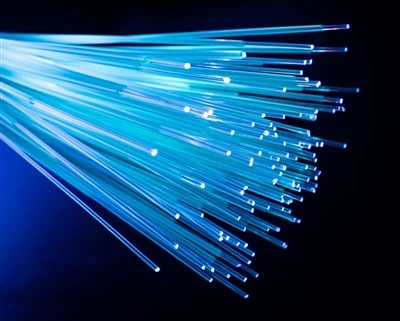
Let’s start with the basics of what optical fiber actually is. If you’ve ever held a loose fiber optic cable, you might have noticed it looks like a thin, transparent plastic thread, similar to fishing line but far clearer. But inside every strand, there are three core components that make data travel possible: the core, the cladding, and the buffer coating. The core is the very center, a tiny glass (or specialty polymer) tube just 9 to 125 micrometers wide—for context, that’s thinner than a human hair. Wrapped tightly around the core is the cladding, another layer of glass with a slightly lower refractive index than the core. Refractive index is just a fancy term for how much a material slows down and bends light. The cladding’s lower index is non-negotiable for how light stays inside the core. Finally, the buffer coating is a tough, plastic layer that protects the fragile glass from scratches, moisture, and physical damage—something I’ve spent years refining in our manufacturing process, because even a tiny scratch can throw off signal strength over long distances.
Now, the part that makes it all click: total internal reflection. This is the physics trick that keeps light from leaking out of the core as it travels, even when the fiber bends around corners, over miles of landscape, or through walls. Light moves in straight lines in a uniform medium, right? But when light hits a boundary between two materials with different refractive indices, something happens. If the light hits that boundary at a shallow enough angle—called the critical angle—it doesn’t bend outward into the cladding. Instead, it reflects back inward, like a ball bouncing off a wall. That’s total internal reflection, and it’s why light can zip through the core without escaping. Think of it like a tunnel for light: every time the light tries to wander toward the edge of the core, the cladding bounces it right back in. That’s the foundation of how optical fiber works, and it’s what makes it so much more efficient than copper, where electrical signals bleed out as interference or degrade over distance.
But light alone doesn’t carry data—we need to encode information onto that light, and that’s where transmitters come in. At one end of the fiber, you’ll find a laser diode or an LED (light-emitting diode) that generates a beam of light modulated to carry binary data. Binary is just a series of 0s and 1s, right? So engineers turn that data into changes in the light beam: a brighter pulse represents a 1, and a dimmer or absent pulse represents a 0. Early fiber systems used LEDs, which are cheaper but only good for short distances, so they’re mostly used in things like home networking now. Modern long-haul telecom uses lasers, which produce a tight, consistent beam that can travel hundreds of miles without needing a signal boost. That’s why your long-distance calls or streaming services work even when the data travels across oceans—laser-modulated fiber is built for that range.
Wait, but why is fiber so much faster than copper? Let’s break that down with a simple comparison. Copper cables send signals as electrical currents, which have to move through a conductive metal. Along the way, those currents encounter resistance, which turns some of the signal into heat, and they can also pick up interference from other electrical devices—like microwave ovens, radios, or even other copper cables nearby. That interference slows the signal down and causes errors, so you have to install repeaters every 50 to 80 miles to boost the signal. Fiber sends light, which is an electromagnetic wave, but it’s not electrical, so it doesn’t pick up that kind of interference. Light also moves much faster than electricity: light travels at about 186,000 miles per second in a vacuum, and in glass it’s only slightly slower (roughly two-thirds of that speed), while electricity in copper travels at around 110,000 miles per second. Add in no interference and fewer needed repeaters, and fiber is clearly the better choice for high-speed, long-distance data transfer.
There’s also a difference between single-mode and multi-mode fiber, which I get asked about all the time when customers come to us for supply. These two types use different core sizes, and they’re built for different uses. Multi-mode fiber has a much wider core—usually 50 or 62.5 micrometers. That means multiple light beams (or “modes”) can travel through the core at the same time. But here’s the catch: the different modes travel at slightly different angles, so they arrive at the other end at slightly different times. That’s called modal dispersion, and it limits multi-mode fiber to shorter distances—usually less than 550 meters for gigabit speed. Multi-mode is perfect for small spaces, like office buildings or campuses, where the distance between devices is short and cost is a top priority. Single-mode fiber, on the other hand, has a core that’s only 9 micrometers wide—so small that only one mode of light can travel through it. That eliminates modal dispersion, so a single laser beam can travel thousands of miles without degrading. Single-mode is what’s used for long-haul telecom, undersea cables, and high-speed data centers, where speed and distance matter most. As someone who’s worked with both types, I always make sure to ask customers about their use case before recommending either—there’s no one-size-fits-all, but getting the right type makes all the difference.
Another question I hear a lot: why is fiber so much more capable of handling high bandwidth than copper? Bandwidth is just how much data you can send at once, and fiber’s bandwidth is almost unlimited. That’s because light has a much higher frequency than electrical signals in copper. Electrical signals are in the kilohertz or megahertz range, while the light used in fiber is in the terahertz range. Terahertz is a thousand times bigger than gigahertz, so you can fit thousands of times more data onto a single light beam than you can onto an electrical signal. Plus, you can use multiple different wavelengths of light (that’s different colors of light) on the same fiber at the same time—something called wavelength division multiplexing, or WDM. With WDM, you can have dozens of different color beams each carrying their own data stream, all traveling through the same core at once. That’s how fiber can carry terabytes per second, something copper could never dream of doing. I’ve seen WDM systems in action on our supply projects, and it’s mind-blowing how much data a single fiber can handle—enough to stream every HD movie ever made at the same time, if you wanted to.
Of course, fiber isn’t perfect. It’s much more fragile than copper, because the glass core can break if bent too sharply or pulled too tight. That’s why proper installation is key—something my team works closely with contractors to get right, even as a supplier. You can’t kink a fiber cable like you can a copper wire; even a small bend can cause signal loss, especially in single-mode fiber. Also, fiber is more expensive to install upfront than copper, because it requires specialized tools to splice the strands together and test the signal. But over time, fiber is cheaper overall because it needs fewer repeaters, has lower maintenance costs, and can handle future increases in bandwidth without needing to replace the cable. For businesses that plan for the next 10 or 20 years, that upfront cost is well worth it.
Now, think about where fiber is used in your daily life. When you video call your cousin in another country, that data goes from your phone or computer to a local exchange, then onto a fiber cable that runs across town, then maybe an undersea fiber cable to the other continent, then back down to a local exchange near your cousin’s home. Even your home internet, if you have a gigabit plan, is likely delivered via fiber—what’s called FTTH, or Fiber to the Home. Before fiber, home internet was mostly copper DSL or cable, which could only get you so fast, and as people started streaming 4K, working from home, and connecting smart devices, copper couldn’t keep up. That’s why more and more homes and businesses are switching to fiber, and that’s where our supply comes in—we’re the ones making sure the strands are clear, durable, and sized exactly for whatever project a customer is working on, whether it’s a small office network or a cross-country telecom line.
I’ve been in this industry for long enough to see how much fiber has changed over the years. Early fiber systems in the 1970s could only carry a few megabits per second over a few miles, and the glass had so much impurity that signal loss was a huge problem. Now, modern fiber has almost zero impurity, and signal loss is so low that a light beam can travel 100 miles without needing a boost. That evolution is what makes fiber the backbone of the modern internet—without it, we wouldn’t have the seamless global connections we rely on every day.

If you’re a business owner, IT manager, or network operator looking to upgrade your infrastructure, understanding how fiber works is the first step to choosing the right solution. Whether you need multi-mode for a campus network or single-mode for long-haul connectivity, having the right fiber is critical to performance and reliability. If you’re interested in exploring what optical fiber can do for your next project, feel free to reach out to our team to discuss your specific needs—we’re here to help you navigate the ins and outs of fiber technology and find the perfect product for your goals.
Non-metal Dielectric Optical Cable References:
- Keiser, G. (2000). Optical Fiber Communications (3rd ed.). McGraw-Hill.
- Senior, J. M., & Jamro, M. Y. (2009). Optical Fiber Communications: Principles and Practice (3rd ed.). Pearson.
- U.S. Department of Energy. (2018). Fiber Optic Technology: Basics and Applications. Office of Energy Efficiency and Renewable Energy.
- National Institute of Standards and Technology. (2021). Wavelength Division Multiplexing for High-Capacity Optical Networks. NIST Special Publication.
Hangzhou Lin’an Kexin Optical Cable Co., Ltd.
As one of the most professional optical fiber manufacturers and suppliers in China, we’re featured by quality products and good price. Please rest assured to wholesale discount optical fiber made in China here and get pricelist from our factory. Customized orders are welcome.
Address: No. 28 Linglong Street,Lin’an Area, Hangzhou City, Zhejiang Province, China
E-mail: sales@kexincable.com
WebSite: https://www.kexincable.com/
