If you’ve ever wondered how water treatment plants turn murky, dirty water into something safe enough to release back into local waterways or reuse for agriculture, there’s a tiny, unassuming hero at work nonionic polyacrylamide (PAM). I’ve spent years as a nonionic PAM supplier, and one of the most common questions I get from customers from municipal water operators to agricultural irrigation managers and even mining teams is this: “How does this stuff actually make all that gunk clump together so fast?” Today, I’m breaking it down simply—no stuffy lab jargon, just the real, practical way nonionic PAM works for flocculation. Nonionic Polyacrylamide
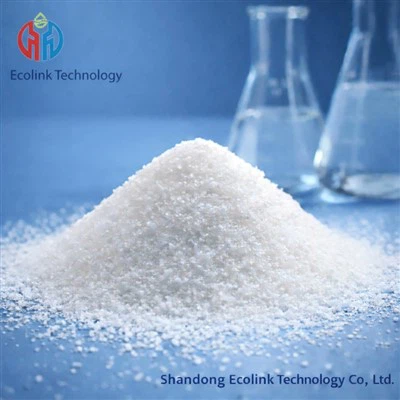
First, let’s get one thing straight: flocculation is just the process of making tiny, invisible particles in liquid stick together to form bigger, heavier clumps (we call those “flocs”) that can be easily filtered out or settled at the bottom of a tank. A lot of people mix up flocculation with coagulation, but let’s skip that debate for a second—what matters here is why nonionic PAM, specifically, is different from anionic or cationic variants, and why that makes it my go-to product for so many applications.
Let’s start with the problem nonionic PAM solves. All those tiny particles in water or slurry—think clay, silt, fine organic debris, or mining tailings—are negatively charged. If you’ve ever tried to mix dirt and water, you know those particles just float around, never sticking. Why? Because same charges repel each other, right? Those negative charges are like tiny magnets with both north poles facing each other. Other PAM types, like anionic or cationic, work by either matching that charge (anionic has negative charges too, so it can help bridge smaller particles) or flipping it (cationic has positive charges, so it neutralizes the negative repulsion). Nonionic PAM? It’s not charged at all. That’s its superpower.
Wait, hold up—if it’s not charged, how does it work? That’s where the “polymer” part of polyacrylamide comes in. PAM is a long chain of repeating molecules, like a strand of super flexible, tiny beads strung together. For nonionic PAM, each of those beads is neutral, so the whole chain doesn’t have a positive or negative end. Now, let’s imagine that messy mixture of tiny particles in water. Those particles are bouncing around randomly, right? If you add nonionic PAM to the mix, those long, neutral polymer chains stretch out through the water. They’re long enough to reach across gaps between several tiny particles at once. So one end of a nonionic PAM chain might stick to a silt particle on the left, the middle might wrap around a tiny clay particle in the center, and the other end might hook onto a fine organic fragment on the right. That’s the flocculation bridge, plain and simple. It’s like tying all those separate little rocks and pieces of debris together into one big, heavy boulder that can sink instead of floating around.
But why nonionic specifically, and not the charged ones? That’s another question I get all the time. Let’s use an agricultural example, since that’s a huge use case for us. A farmer might use PAM to keep soil from eroding when they water crops. If they use cationic PAM, which has positive charges, it can stick to and change the surface of soil particles—but if there’s a lot of dissolved salts in the irrigation water (which there often is, depending on the region), those salt ions will grab onto the cationic PAM instead of the soil. That makes the PAM useless. Nonionic PAM, though? It doesn’t care about those salt ions. Since it’s neutral, it only interacts with the soil particles’ surfaces, not the random salts floating around. That’s why it’s way more reliable for irrigation, mining, and even some municipal water applications where water has a mix of different dissolved and solid stuff.
Another big use case is wastewater from food processing, like a vegetable canning plant. Their wastewater has a mix of fine vegetable pulp, silt, and sometimes mild acidic or alkaline residues. Cationic PAM might break down in that slightly acidic water, and anionic might not stick well to the organic particles because those particles can be neutral too. Nonionic PAM? It works across a wider pH range, usually from like 5 to 8, which covers most industrial and agricultural wastewater. No need to adjust the pH before adding it—saves time and money, which is a big deal for small to mid-sized operations that don’t have huge lab teams.
Let’s talk about how we actually use nonionic PAM in the floc process, because mixing it wrong is a waste of money. A lot of first-time customers make the mistake of just dumping the dry powder straight into their tank. That’s a no-go. Nonionic PAM has to be pre-dissolved first, usually in clean water at a concentration of like 0.1% to 0.5%. If you add dry powder directly, it clumps up into hard, sticky balls called “fish eyes” that never dissolve, so none of the polymer chains are free to do their job. That’s a mistake I help customers avoid all the time—we even send a quick how-to sheet with every order, because it’s a tiny step that makes a huge difference.
Once it’s dissolved, you add the nonionic PAM to the flocculation tank slowly, while it’s mixing gently. Too fast, and the polymer chains get stretched too tight and break apart—they can’t bridge particles anymore. Too slow, and you’re wasting product, adding more than you need. The right amount? That varies, but for most applications, it’s like 1 to 10 parts per million of the liquid you’re treating. For context, that’s less than a teaspoon of PAM in 1,000 gallons of water. It’s that potent, which is why it’s so cost-effective.
Let’s test this with a real scenario. Last year, I worked with a small mining operation in the western US that was dealing with tailings water—water left over from processing ore, full of fine rock particles. They were using an old anionic PAM that wasn’t working because the tailings had high levels of dissolved iron, which messed up the charge. They tried nonionic PAM, and within a few days, their settling time for the tailings dropped from 6 hours to 45 minutes. The flocs were bigger, clearer water came out, and they could reuse that water for processing instead of wasting it. That’s the kind of result I love to see.
Wait, but what about when nonionic PAM isn’t the right choice? It’s not a one-size-fits-all, obviously. If someone is dealing with wastewater that has mostly charged particles, like from a paper mill that has negatively charged fiber particles, anionic PAM might be cheaper and more effective. But when there’s a mix of particles, variable pH, or dissolved salts, nonionic is almost always the way to go. Its neutral charge is its biggest strength here—it’s versatile, so it works in more conditions than the charged variants.
Another thing people don’t talk about much: nonionic PAM is also biodegradable, which is a huge plus for environmental compliance. A lot of places now have strict rules about what you can release into waterways, and nonionic PAM breaks down much faster than other types of polyacrylamide, so there’s less risk of it lingering in the environment. For farmers, that means they don’t have to worry about it building up in their soil, and for water treatment plants, it means the water they discharge meets all local regulations. I always make sure to mention that to customers who are worried about environmental impact, because it’s not just about getting the floc done—it’s about doing it responsibly.
Let me break down the floc process step-by-step with nonionic PAM to make it even clearer, no fancy terms:
- You start with your messy liquid: water full of tiny, invisible particles that won’t settle.
- Add nonionic PAM solution to the tank, mix gently. The long, neutral polymer chains spread out through the liquid.
- Each chain sticks to 2 or more tiny particles at once, tying them together into a floc.
- The flocs get bigger and heavier, so they sink to the bottom of the tank.
- The clear water on top is drawn off, and the settled flocs are filtered out or reused as needed.
That’s it. It’s simple, but it’s so effective. I’ve seen this work for everything from residential well water treatment (for people whose well water is too murky to drink) to large-scale construction site sediment control. Construction sites are a big one—they have a lot of exposed soil, and when it rains, all that silt runs off into nearby streams, which can harm fish and other aquatic life. Adding a small amount of nonionic PAM to the runoff before it leaves the site makes the silt settle way faster, so you don’t get fined for polluting local waterways. It’s a low-cost solution for a big environmental problem.
Now, I know what some of you are thinking: “Is there a chance nonionic PAM could have negative effects?” Like any chemical, you have to use it correctly. Too much, and the flocs get too big and fluffy, so they don’t settle well. Too little, and there’s not enough chains to bridge the particles, so they stay separate. But as long as you follow the dosage and mixing instructions, it’s safe. We send safety data sheets with every order, and I’m always available to walk customers through the right amount for their specific setup. No hidden fees, no confusing manuals—just straightforward help.
At the end of the day, my job as a nonionic PAM supplier isn’t just to sell a product. It’s to help people understand why it works, so they can use it better. I’ve had customers come to me before who were using the wrong type of PAM for their application, wasting money and not getting the results they needed. Once they switch to nonionic, they see a difference right away. That’s what makes this job worth it—knowing that the product we provide is actually solving real problems, whether that’s a farmer keeping their soil in place, a mining operation reducing water waste, or a water treatment plant making clean water for their community.

If you’re dealing with murky water, sediment, or slurry, and you’re tired of solutions that don’t work or cost too much, nonionic polyacrylamide is probably the answer. It’s versatile, effective, and compliant with most environmental regulations. To learn more about how it can work for your specific application, reach out to discuss your needs and get a custom recommendation for dosage and usage.
Industrial Grade Polyaluminium Chloride References
- Edzwald, J. K. (2010). Coagulation and flocculation in water and wastewater treatment. IWA Publishing.
- Yarovsky, I., & Phillips, J. (2001). Polymer-particle interactions in flocculation. Advances in Colloid and Interface Science, 89, 1-24.
- Wei, J., et al. (2018). Application of nonionic polyacrylamide in agricultural soil erosion control. Journal of Environmental Management, 217, 542-549.
- American Water Works Association. (2020). Water treatment fundamentals. AWWA.
Shandong Ecolink Technology Co., Ltd.
Shandong Ecolink Technology Co., Ltd. is one of the most reliable nonionic polyacrylamide manufacturers and suppliers in China. We warmly welcome you to wholesale bulk high quality nonionic polyacrylamide from our factory. If you have any enquiry about cooperation, please feel free to email us.
Address: No.8, Xiaying Chemical Industry Park, Aobu Road, Xiaying Town, Changyi City, Weifang City, Shandong Province,China
E-mail: sale02@ecolink-environment.com
WebSite: https://www.ecolink-environment.com/
