If you’ve ever stood inside a commercial building’s electrical room at 2 a.m., when the only sound is the hum of metal and wires doing their quiet, critical work, you’ve probably glanced at a row of grey cabinets lining the wall and wondered: what even are these things? For anyone working in construction, facilities management, or industrial maintenance, two terms come up again and again when talking about that equipment—MCCs and low voltage switchgear. As someone who’s spent the last 12 years supplying low voltage switchgear to hospitals, manufacturing plants, and mid-sized commercial developers across the Midwest, I can tell you this is one of the most common (and most important) questions I get asked on sales calls. A lot of folks use the terms interchangeably, and while there’s some overlap, mixing them up can lead to costly missteps during installation, maintenance, or even emergency repairs. Today, I want to break down exactly what sets them apart, using real examples from the jobs I’ve worked on, so you know which one your project actually needs. Low Voltage Switchgear
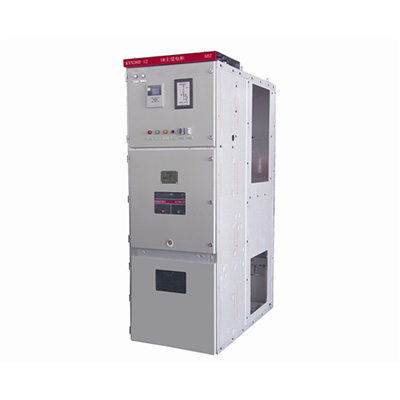
Let’s start with the most basic definition, because that’s where the confusion usually starts. First, low voltage switchgear (often shortened to LV switchgear) is a collection of electrical components designed to control, protect, and isolate electrical equipment at voltages typically below 1,000 volts (V)—that’s the “low voltage” part. Think of this as the building’s electrical command center. Its core job isn’t to control individual motors or small loads; it’s to manage the flow of power to larger systems, protect the whole electrical network from surges or faults, and let operators shut down entire sections of power safely if something goes wrong. The components you’ll find inside LV switchgear are things like circuit breakers, fuses, busbars (the thick metal bars that carry large amounts of current), and relays that monitor for overloads or short circuits.
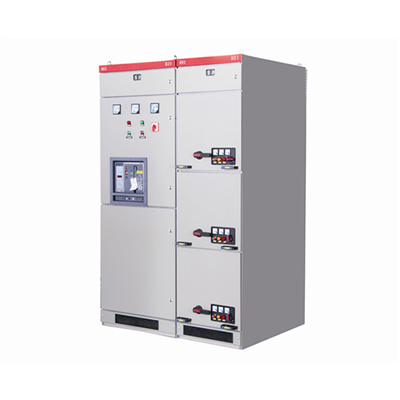
Now, what’s an MCC? That stands for Motor Control Center. At its core, an MCC is a very specific type of low voltage switchgear, built exclusively for controlling and protecting electric motors. If LV switchgear is the building’s main office, an MCC is the department wing that handles only the motor teams—think of the conveyor belts in a food processing plant, the HVAC fans in a hospital, or the pumps in a water treatment facility. Instead of being built to manage a wide range of electrical loads, an MCC is configured with individual “buckets” or compartments, each dedicated to one motor. Each bucket has its own breaker, starter, and overload protection tailored exactly to the size and needs of that single motor.
To make the difference concrete, let’s pull from a job I did three years ago with a local manufacturing plant that makes bottled water. Their main electrical room had two sets of cabinets: one LV switchgear unit mounted against the back wall, and three separate MCCs lining the opposite side. The switchgear fed power to the entire facility, from the 480V main line coming in from the grid down to the subpanels that serve the building’s lighting, vending machines, and office equipment. But the plant’s core production line—including the conveyors that move bottles, the pumps that fill them, and the cooling system that keeps the water at safe temperatures—all ran on motors. Those motors were all tied back to the MCCs. If one of the plant’s main feeders had a fault, I could shut off the switchgear’s main breaker to stop power to the whole facility safely, without touching the motors directly. If, say, the filling pump’s motor overheated, though, the MCC’s bucket would trip its own overload breaker, shutting off just that pump while leaving all the other motors and the rest of the plant running. That’s the divide right there: LV switchgear controls and protects the broader electrical system, while MCCs control and protect individual motors.
Let’s dive deeper into the key differences, because there’s more to it than just what they control. First, scope of function. Low voltage switchgear is a distribution and protection hub first. It takes the incoming utility power, steps it down if needed, routes it to various subcircuits, and includes safety devices that prevent faults from spreading. For example, if a lightning strike causes a power surge that fries the plant’s main electrical line, the switchgear’s surge protectors and main circuit breaker will trip immediately to stop that surge from reaching and damaging sensitive equipment like PLCs (programmable logic controllers) or server systems. MCCs, by contrast, have one core function: motor control. Each bucket includes a motor starter—either direct-on-line (DOL) starters for smaller motors or variable frequency drives (VFDs) for larger ones that need speed control. That VFD, for example, lets the plant adjust the speed of its conveyor belts to match production rates, a feature that’s built right into the MCC bucket and not something you’d find in a standard LV switchgear unit.
Next, design and configuration. LV switchgear is built to handle mixed loads. A single unit might have compartments for main distribution, lighting circuits, HVAC power, and general purpose subpanels. Busbars inside an LV switchgear unit are sized for large, steady loads, since they’re carrying power to multiple areas at once. The whole unit is usually arranged to be accessible for maintenance: operators can pull out entire section panels (called “drawout breakers”) without shutting off power to the rest of the switchgear, which is critical for facilities that can’t afford full power outages. MCCs, on the other hand, are modular by design around individual motor needs. Each bucket is a standardized unit, so you can add or remove buckets as your motor needs change—if a plant expands its production line, we can just add a new MCC bucket for the new conveyor motor instead of having to swap out the entire MCC. The busbars in an MCC are sized for motor load, which can have high starting current (that surge of power a motor needs to kick on), so they’re thicker than what you’d find in a same-sized LV switchgear unit.
Application use cases are another easy way to tell them apart. Let’s list out where each goes, because that’s what matters most to our customers. You’ll find LV switchgear in almost every commercial and industrial building: office towers, hospitals, schools, manufacturing plants, retail centers. It’s usually located in a central electrical room or vault, and it’s the first stop for power after it comes from the utility. For example, a 10-story office building’s LV switchgear will handle power for all 10 floors: lighting, elevators, kitchen equipment, and IT rooms. MCCs, though, show up only where you have multiple electric motors controlling process or mechanical equipment. That water bottling plant I worked on had MCCs; a hospital will have MCCs for its elevator motors, HVAC system fans, and medical gas pumps; a food processing plant will have MCCs for mixers, conveyors, and packaging line motors. You won’t find an MCC in a small retail store or a single-family home—those don’t have enough large motors to justify the specialized unit.
Now, here’s a common mistake I see people make: assuming that if they need to control motors, they need an LV switchgear. No, an MCC is the right tool for that job, and trying to use standard LV switchgear for motor control is a recipe for inefficiency and even safety risks. I once had a small commercial bakery call me in a panic because their old electrical cabinet (which they thought was “switchgear”) kept tripping every time they turned on their dough mixer. When I looked inside, it was a standard LV distribution panel, not an MCC. It didn’t have the motor overload protection or the starter that’s designed to handle the mixer’s high starting current, so the breaker was triating unnecessarily every time they powered up. We swapped it out for a small MCC with a dedicated VFD for the mixer, and the problem was solved in an hour. That’s exactly the kind of avoidable issue that comes from mixing up these two pieces of equipment.
Another difference to note is maintenance and testing. LV switchgear requires regular testing to check for insulation breakdown, tight busbar connections, and the functionality of main breakers and relays. The testing is broad, since it covers the whole electrical system. MCCs, on the other hand, require more targeted testing per motor bucket. Each starter needs to be tested to make sure it turns the motor on and off correctly, overload protection needs to be calibrated for that specific motor’s size, and VFDs need software updates to keep them running smoothly. For facilities with many motors, having separate MCCs makes maintenance easier because you can work on one motor’s bucket without affecting the rest of the system, whereas working on a section of LV switchgear might require shutting down multiple areas of the building.
Price is another practical factor. Since they’re specialized for motor control, MCCs are usually more expensive per unit than standard LV switchgear cabinets of the same size. But the long-term value is clear: they’re built to handle the specific demands of motor loads, have built-in protection that prevents motor damage, and are easier to modify as your operation grows. LV switchgear is a lower upfront cost for broad power distribution, but it’s not designed to handle repeated motor starting cycles or speed control, so using it for motor control ends up costing more in repairs and downtime over time.
Now, let’s talk about when you need both, because a lot of projects use them together. That water bottling plant I mentioned earlier: their main LV switchgear fed power to the entire facility, including the MCCs. The MCCs didn’t take power straight from the grid; they took it from the LV switchgear’s subpanels, which distributed power to specific process areas. So you can think of it like a pipeline: the LV switchgear is the main pipeline carrying water across the property, and the MCCs are the smaller, dedicated lines that feed only the parts of the factory that need to power the motors. For a hospital, the LV switchgear feeds power to the entire campus, and MCCs control life safety systems (like elevator motors and fire pumps) and clinical equipment motors. They work in tandem, but their roles are distinct.
Over the years I’ve had customers come to me with projects where they tried to cut corners by using an MCC as a main switchgear unit, and it never works out. Last year, a small industrial contractor building a new parts fabrication shop tried to use two compact MCCs as the main power distribution system to save money. Within six months, the MCCs were overheating because they weren’t sized to handle the full general power load for the shop, and the main breakers couldn’t trip fast enough during a small fault, which put the entire production line at risk. We replaced them with a custom LV switchgear unit designed for their full load, and reconfigured the existing MCCs to handle just the motor-controlled parts of the line, which fixed the issue. That’s why taking the time to get the difference right upfront saves so much headache later.
So to wrap this up, the key takeaways are simple: Low voltage switchgear is the central hub that distributes and protects overall electrical power in a system or building. It’s built for mixed loads, broad fault protection, and general power distribution. MCCs are a specialized subset of low voltage equipment, designed exclusively to control and protect individual electric motors, with features like dedicated starters and overload protection tailored to motor loads. You’ll find LV switchgear in almost every building with electrical power, and MCCs wherever there are multiple large motors driving critical operations. They work together often, but they’re not interchangeable.
If you’re working on a new construction project, upgrading your facility’s electrical system, or troubleshooting a persistent issue with motors or power distribution, getting the right equipment is critical to avoiding downtime and safety risks. As a supplier dedicated to low voltage switchgear and motor control solutions for over a decade, I’ve helped hundreds of customers get the right gear for their specific needs—whether that’s a small LV switchgear unit for a retail space or a custom MCC bank for a large manufacturing plant. We offer custom configurations, on-site testing, and maintenance support to make sure your electrical system runs reliably for years to come. If you’re ready to talk through your project needs and find the right solution for your space, feel free to reach out to our team for a no-obligation consultation.
High Voltage Switchgear References
- International Electrotechnical Commission (IEC) 60439-1: Low-voltage switchgear and controlgear assemblies – Part 1: General rules.
- National Electrical Manufacturers Association (NEMA) Standard ICS 2: Motor Control Centers.
- Institute of Electrical and Electronics Engineers (IEEE) Std 242: Recommended Practice for Protection and Coordination of Industrial and Commercial Power Systems.
Anhui Xinchen Electrical Equipment Co., Ltd.
We are one of the most reliable low voltage switchgear manufacturers and suppliers in China, specialized in providing high quality customized products. We warmly welcome you to buy bulk low voltage switchgear for sale here from our factory. Contact us for quotation.
Address: No. 8, Waihuan South Road, Economic and Technical Development Zone, Ningguo City, Xuancheng City, Anhui Province
E-mail: xinchen0316@126.com
WebSite: https://www.cn-xinchen.com/
