Hey there, if you’ve ever looked at a die casting part and thought, “Man, I need to put some threads in that to bolt it to something else,” you’re not alone. As a die casting parts supplier, I get this question literally every week—from small hobby shops building custom equipment to big automotive brands cranking out thousands of parts a month. Threads in die cast parts aren’t as straightforward as drilling them after the part comes out of the mold, and if you mess it up, you’ll end up with scrap, broken bolts, or parts that fall apart way before they should. Let me walk you through how we do it at our shop, no fancy jargon (or AI-induced fluff) included. Die Casting Parts
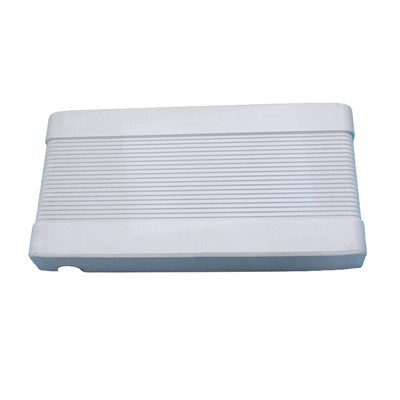
First off, let’s cut to the chase: there are two main ways to get threads in a die casting part. Either you build the threads right into the mold itself (that’s “in-mold threads,” if you wanna get technical) or you machine them after the part is cast. Both have pros and cons, and picking the right one depends on how many parts you’re making, what material the die casting is, and how tight those threads need to be. I’ve seen too many new customers default to post-cast machining because they think it’s easier, but 9 times out of 10, that’s more expensive long-term—especially if you’re doing volume.
Let’s start with in-mold threads, because that’s our go-to for high-volume runs (anything over 10,000 parts, really). Here’s how it works: instead of leaving a smooth hole in the mold cavity where you want the thread, you put a metal insert called a “core pin” that has the threads carved right into it. When you inject molten metal (usually aluminum, zinc, or magnesium, depending on the part) into the mold, the metal cools around the core pin, so the thread is part of the part—no extra steps. Sounds simple, right? But there’s a lot that can go wrong if you don’t get this right.
First, the core pin material is non-negotiable. We use H13 tool steel for almost all our core pins, and sometimes even powdered metal for super high-wear areas. Why? Because molten die casting metal is hot (like, 1,200°F for aluminum hot), and if the core pin is soft, it’ll wear out after a few hundred shots, leading to messed up threads. Last year we had a customer who tried to use stainless steel pins for a 50,000-run zinc part, and after 12,000 parts, the pins had tiny grooves, so their threads were cross-threading left and right. They ended up having to rework the tooling, which cost them way more than just using the right pin material from the start.
Another big thing with in-mold threads: draft. You know, that tiny taper you put on mold walls so the part doesn’t get stuck when you open the mold? For smooth holes, draft is like 0.5 degrees per side, but for threads, you can’t just throw on the same draft. If you have too much draft, the top of the thread is fatter than the bottom, so a bolt will spin too loose and never tighten. Too little draft, and the part will stick to the core pin, which means you can’t eject it without breaking the thread. We usually run 0.25 degrees per side for male threads (on a core pin) and 0.15 degrees for female threads (in the mold cavity) because female threads have more surface area to hold the part steady. Pro tip: never skip a mold trial for threads. We do 100 test shots for any new thread application, just to check the draft, the pin temperature, and how the metal flows around the pin. Aluminum tends to shrink more than zinc, so we have to adjust the pin size by 0.002mm to account for shrinkage—tiny difference, but it makes or breaks the thread fit.
Wait, speaking of material: thread size and depth matter a lot here too. For in-mold threads, we don’t do anything smaller than M3, and we try to keep thread depth under 1.5x the nominal diameter. So for an M5 thread, that’s 7.5mm max depth. If you go deeper than that, the core pin is just too long and flimsy—it’ll bend during injection, leading to wonky threads. Last month we had a customer ask for M2.5 threads that were 10mm deep in a magnesium die cast part. We had to tell them that’s impossible with in-mold threads, and offered two solutions: either do post-cast tapping, or use a threaded insert. They went with inserts, which saved them from scrapping $15k worth of tooling. Oh right, threaded inserts—those are the third option, not many people talk about them, but they’re super useful for parts that need really strong threads, or if you’re switching materials. Like, if you have a plastic insert in a metal die cast part, or a stainless steel insert for a high-load application. We use heat-set inserts mostly, where you press a threaded metal insert into a hole after casting, using heat to melt a little of the die casting material so it grips the insert. That’s great for load-bearing parts, like engine brackets, where the thread is holding a heavy component.
Now, if in-mold threads aren’t an option, post-cast machining is the way to go. That’s just drilling a hole in the cast part, then tapping the thread with a tap tool. But again, easy to mess up. First, the hole you drill before tapping has to be the right size. A lot of guys just use the standard drill size for the thread, but die casting material is porous, especially if it’s a high-pressure die cast (HPDC) part. Porosity means the hole can be a little bigger or uneven, so if you drill the standard size, your thread will be too loose. We always over-drill the hole by 0.05mm for aluminum and 0.03mm for zinc to account for that porosity. Another thing: tapping speed. If you run the tap too fast, it’ll overheat the tool and the part material, leading to broken taps or stripped threads. We run tapping machines at 80 RPM for aluminum, 100 RPM for zinc, and always use cutting oil—even if the shop guy says “oil is for sissies.” Last year we had a batch of 5,000 aluminum parts that had stripped threads because the machinist skipped the oil and ran the tap at 200 RPM. We had to scrap all 5,000, which was a $20k mistake, and I still remind that guy about it every time we talk about taps.
Wait, another big one for post-cast threads: thread inspection. You can’t just eyeball a thread and call it good. We use thread gauges—go and no-go gauges—to check every part. The go gauge has to spin all the way on the thread without forcing it, and the no-go gauge shouldn’t spin more than a quarter turn. For high-volume parts, we also do periodic pull tests: we torque a bolt to the recommended spec, then take it back off and check for thread damage. If the threads strip before the torque spec, we know our drill size or tap speed is off.
Let me also talk about common mistakes we see from customers, so you don’t make them. First, assuming threads are a one-size-fits-all. If you’re making a part for consumer goods, a loose M4 thread might be fine, but if it’s for a medical device that’s used in a hospital, it needs to meet ISO standards, no exceptions. Second, ignoring draft for in-mold threads—we had a customer who skipped the mold trial because they “knew exactly what they were doing,” and their first 10,000 parts all had threads that got stuck on the pins, so they had to send them all back to us to rework. Third, going too deep with in-mold threads like that M2.5 example I mentioned earlier—don’t be that guy, it’s not worth it.
Now, when should you pick which method? Let’s break it down quick, no spreadsheets needed. If you’re making 10,000+ parts, thread depth is under 1.5x nominal diameter, and material is aluminum or zinc, go with in-mold threads. It cuts out post-cast steps, so your per-part cost is way lower. If you’re making less than 10,000 parts, or need deep threads, or high load-bearing threads, go with post-cast tapping. If you need threads in a plastic or magnesium part, or need super strong threads that won’t strip even if you take the bolt on and off multiple times, use threaded inserts. We did a job for a bicycle brand a while back that needed threads for handlebar mounts—they went with in-mold for 100,000 parts, and have zero issues. Another customer, a small robotics startup, needed just 500 parts with deep M3 threads, so we did post-cast tapping, and it worked perfect for their low-volume run.
A quick note on die casting materials too—threads in zinc are way easier than threads in magnesium. Magnesium is softer and more prone to cracking, so we have to be extra careful with draft and tap speed for post-cast threads. We also don’t recommend in-mold threads for magnesium if the part is going to be exposed to moisture, because magnesium can corrode around the thread, making it seize up later. Aluminum is the most common, and it’s pretty forgiving, as long as you get the pin sizing right.
Wait, can I throw in a recent example that stuck with me? A customer reached out last month panicking because their die cast parts with in-mold threads were all failing torque tests. They sent us a sample, and turns out their mold was made with a cheap core pin material, so the pins were wearing down after 20,000 parts, leading to threads that were slightly undersized. We re-made their pins with H13 tool steel, ran a mold trial, and fixed the threads in 2 weeks, and they saved their entire production run. That’s why we don’t cut corners on tooling—threads make or break a part, and if your threads are bad, the whole part is bad.
If you’re new to working with die casting parts, or you’re dealing with a thread issue that’s making your production get held up, don’t guess at it. I’ve been in this game for 12 years, and I still learn something new about threads every few months. At our shop, we’ve worked with everything from tiny phone parts to heavy construction equipment parts, so we’ve seen every possible thread problem, and we can help you pick the right method, avoid scrap, and keep your production on track.
If you’re looking for a reliable die casting parts supplier that knows their way around threads (and won’t sell you something that’s gonna fall apart), hit us up. We can walk you through your specific part, give you a quote, and even help you adjust your mold design if you’re still in the prototyping phase. No pressure, just real advice from a guy who’s been doing this long enough to know that good threads make good parts.

Before I wrap this up, a quick shoutout to the resources we use to make sure we’re following industry standards. We reference the Die Casting Engineering Handbook for core pin design and draft specs, and ISO 2768 for thread tolerance requirements. That’s how we make sure every part we ship is up to par, no matter the job.
Die Casting Parts (References: Die Casting Engineering Handbook, ISO 2768: General tolerances for linear and angular dimensions)
Suzhou Ruide Die-Casting Mold Co., Ltd.
As one of the leading die casting parts manufacturers and suppliers in China, we warmly welcome you to buy durable die casting parts made in China here from our factory. All customized products are with high quality and competitive price. Contact us for pricelist.
Address: No.2, Wanchen Road, Huayang Village, Wangting Town, Xiangcheng District, Suzhou City, Jiangsu Province
E-mail: mia@cnrdmj.com.cn
WebSite: https://www.cnrdmold.com/
