Hey everyone, it’s Jake here from the exterior wall fiberglass mesh team – you know, the folks who make that stuff that keeps your stucco, EIFS, and masonry from cracking when the weather turns chaotic. I get so many messages every week from builders, contractors, even DIYers asking the same question: “What’s the actual tensile strength of exterior wall fiberglass mesh?” Like, it’s not just a number you grab off a product page, right? It’s make-or-break for a wall that’s gonna face 10+ years of sun, rain, snow, and weird temperature swings. Let’s break this down like I would over a coffee at a job site – no boring jargon, just real talk. Exterior Wall Fiberglass Mesh
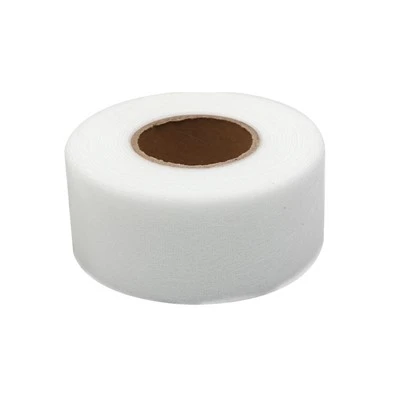
First off, let’s get one thing straight: tensile strength isn’t some random value. It’s how much pulling force a mesh can take before it snaps, and for exterior wall use, this isn’t a one-size-fits-all number. I’ve seen people grab a $5 roll from the hardware store, think it’s tough, only to watch it tear when they’re embedding it in mortar or when a hot summer day makes the stucco expand and contract. That’s why I always tell folks – you can’t just look at a “tensile strength” stat without knowing what kind of mesh we’re talking about.
Most exterior wall fiberglass mesh is made from E-glass, right? It’s the standard for this stuff because it’s got way better resistance to alkali than regular fiberglass – that’s non-negotiable, because exterior walls are exposed to cement mortar and stucco, which are super alkaline. If you get mesh without alkali-resistant (AR) coating, it’ll break down in like 2 years. We use a proprietary acrylic-based AR coating on all our mesh, and that’s half the battle when it comes to consistent tensile strength. Now, the tensile strength numbers: when people ask, they usually mean two types – dry tensile strength (that’s the raw strength of the glass itself before it’s exposed to weather) and wet/aged tensile strength (after it’s been sitting in alkaline conditions for like 1000 hours, which simulates years of real-world exposure).
For standard 160-gram per square meter (gsm) exterior wall mesh – that’s the go-to for most residential and light commercial walls – the dry tensile strength is around 2800 Newton per 50mm width. Wait, let me translate that so it makes sense: that’s like pulling on a 2-inch strip of mesh with a force equal to almost 630 pounds, and it won’t break. Crazy, right? But here’s the catch – when you age it in alkaline solution (like the stuff from cement), that number drops a little, but it’s still around 2200 N/50mm. That’s still 495 pounds of pull, which is way more than what a typical exterior wall would ever put on it. But if you go heavier – like 180 or 200 gsm mesh for high-stress areas, like corners or areas where the wall meets a window frame – that jumps up to 3500+ N/50mm dry, and 2700+ after aging. I’ve had contractors tell me they use the heavier stuff on every corner of a 2-story home, and I don’t blame them – corners are where cracks start when the house shifts a tiny bit.
Now, I get the skepticism. A lot of cheap mesh sellers will list their tensile strength as like 3000 N/50mm, but that’s dry strength, and they don’t tell you it’s not AR-coated, so that strength vanishes once it gets wet with mortar. I’ve tested junk mesh before – I once bought a random roll at a big box store to compare, and after 500 hours in alkali, its tensile strength dropped to 800 N/50mm. That’s like 180 pounds of pull – that’ll snap if you’re just tightening it down while stuccoing. So when we talk real tensile strength for exterior use, we’re always talking about the aged, alkali-resistant value. That’s the one that matters when the wall is actually doing its job.
Wait, let’s talk about what tensile strength actually does for you, not just the number. If your mesh has enough tensile strength, it stops those shrinkage cracks that pop up in stucco or EIFS. I’ve been doing this for 12 years now, and I’ve seen so many walls that had to be redone because the mesh was too weak. Last year, a contractor brought me a sample of a wall he fixed – the original mesh was 120 gsm, non-AR, aged 3 years, and it was snapping just by peeling it off the wall. The cracks were all along the horizontal lines, where the mesh was weak. We supplied him with our 160 gsm AR mesh, and he hasn’t called back about cracks since. That’s the real win here – tensile strength isn’t just a spec, it’s the thing that makes your wall last.
Another thing that affects tensile strength: the weave. Most exterior wall mesh is a plain weave, right? But how the threads are woven – the density, how tight each thread is, even the direction – makes a difference. We use a 5×5 mm mesh opening for our standard stuff, which is perfect for embedding in mortar without leaving gaps. If you have a bigger opening, like 10×10 mm, the tensile strength drops because there’s less thread holding together. And when you’re pulling the mesh over a corner, the weave can’t have too much give – if it’s too stretchy, the tensile strength goes down. We test every batch to make sure the elongation at break (that’s how much it stretches before snapping) is less than 5%. That means when you’re pulling it tight over a window jamb or a corner, it doesn’t stretch and then shrink later, which would leave gaps in the stucco.
I know a lot of DIYers out there are thinking, “I can just use mesh from the hardware store and save money.” But here’s the thing: the $10 roll vs. our $15 roll – the difference in tensile strength is massive. Last month, a DIYer reached out to me saying he used cheap mesh on his backyard shed, and it cracked within 6 months. He ordered our 160 gsm mesh, did the stucco himself, and texted me a pic a week later showing it was perfect. He said he would’ve saved himself a headache if he’d just gotten the right mesh in the first place. Tensile strength isn’t an extra luxury – it’s the non-negotiable that keeps your wall from failing.
Now, let’s clear up a common myth: higher gsm doesn’t always mean higher tensile strength. Wait, hold on, let me explain. If you get gsm without AR coating, or a bad weave, a 200 gsm mesh might actually have lower aged tensile strength than a properly made 160 gsm AR mesh. Because the cheap manufacturers will use thinner E-glass threads to make the gsm look high, but the AR coating is garbage. So they cram more thread (or thinner thread) into the same space, but the alkali eats through it fast, and the tensile strength plummets. That’s why when we do our testing, we don’t just weigh the mesh – we pull it before and after aging, check the coating, test the weave. We’ve had some customers come to us with 200 gsm mesh samples from other brands, and our 160 gsm mesh has better aged tensile strength. It’s all about quality, not just the number on the roll.
What about for different exterior wall systems? Like, EIFS vs. stucco vs. masonry repair? Let’s break that down. For EIFS (exterior insulation and finish systems), the mesh is embedded in the base coat, and it needs to have enough tensile strength to hold the insulation board in place, plus resist impact. Our 160 gsm mesh works great here, but if you’re doing a commercial EIFS on a 5-story building, you might want to step up to 180 gsm for the lower floors, which get more wind and impact. For stucco, which is thicker, the mesh needs to be strong enough to span the lath and resist shrinkage – same 160 gsm is standard, but around door and window openings, we always recommend doubling up the mesh or using the heavier 180 gsm, because those areas get a lot of stress when the wall settles. For masonry repair, like patching cracks in an old brick wall, you can use a lighter 145 gsm mesh, but you still need AR coating so it doesn’t react with the old mortar.
I get asked all the time, “How do I know if the tensile strength is real?” The short answer is: ask for test data. Any reputable supplier should have third-party test reports that show both dry and aged tensile strength. We keep our test reports on file, and we send them to any customer that asks, no questions. If a seller can’t show you a test report, or only shows you dry strength, that’s a red flag. That’s the junk mesh that’s gonna let you down when the weather turns.
Let’s talk real-world numbers, like what you’ll actually see on a job site. I was on a job last month in Denver, where the temperature swings from 10°F in winter to 95°F in summer – crazy expansion and contraction. The contractor used our 160 gsm mesh for the entire house, and when we came back 6 months later to check, there wasn’t a single crack. He told me he used a different brand on his own house, which had cracks all along the foundation after the first winter. That’s the tensile strength working – it’s holding the stucco together through all that movement.
Another thing: installation affects tensile strength too. Even if your mesh has a 2800 N/50mm tensile strength, if you stretch it too tight or embed it too shallow in the mortar, you’re not getting that strength. You have to embed it so that it’s centered in the stucco or EIFS base coat – about half the thickness of the layer. If it’s on the surface, it’ll tear; if it’s buried too deep, it doesn’t do anything. And don’t pull it so tight that it’s strained before the mortar even sets – that’s like stretching a rubber band until it’s almost broken, then expecting it to hold. Tensile strength is there to handle forces after the wall is done, not during installation.
Wait, let’s touch on standards, because that’s another way to verify tensile strength. In the US, we follow ASTM standards for fiberglass mesh for external plaster and EIFS. The standard for AR fiberglass mesh (ASTM C1393) requires a minimum dry tensile strength of 2500 N/50mm and minimum aged tensile strength (after 1000 hours in alkaline solution at 80°C) of 2000 N/50mm for 160 gsm mesh. All our mesh meets or exceeds that – our aged tensile strength is consistently around 2250 N/50mm for 160 gsm, which is 10% over the minimum. That’s the baseline you should always go for. If a mesh doesn’t meet ASTM C1393, it’s not suitable for exterior use, no matter what the sales guy tells you.
I’ve been in this business long enough to know that when a builder or contractor is working on a project, they’re looking for two things: quality and reliability. The tensile strength of exterior wall fiberglass mesh is the foundation of that reliability. It’s not a spec to pad a product sheet – it’s what keeps your wall from cracking, from needing repairs in a year, from costing you extra money down the line. A lot of people cut corners on mesh to save a few bucks, but in the end, that ends up costing them way more.
Let’s wrap this up with a quick recap, no fancy stuff: real exterior wall fiberglass mesh tensile strength depends on being alkali-resistant, meeting ASTM standards, and looking at aged values, not just dry. Standard 160 gsm AR mesh has ~2800 N/50mm dry, ~2200 N/50mm aged. Heavier 180-200 gsm goes up to ~3500 N/50mm dry, ~2700 N/50mm aged. Weave, coating, and installation also play a huge role in how that strength translates to a real wall.
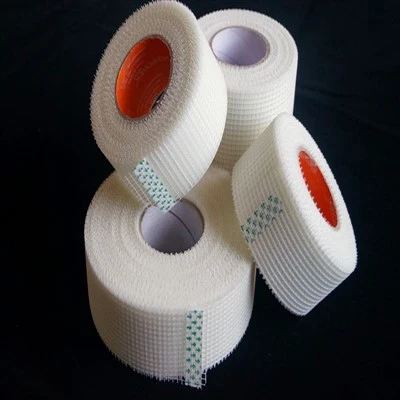
If you’re a builder, contractor, or even a DIYer working on an exterior wall project and you need mesh that actually delivers on that tensile strength number – we’ve got you covered. We test every batch, use only high-quality E-glass and acrylic AR coating, and we’ll send over our test reports anytime you need them. No junk, no hidden specs, just real numbers for real job sites. Hit us up to chat about your project, whether you need mesh for a single residential wall or a whole commercial build. We’re here to make sure your walls hold up, not fall apart.
Fiberglass Tissue If you want to learn more about fiberglass mesh specs and test methods, check out these sources: ASTM International Standard C1393 for Standard Specification for Base Coat Stiffening Fiberglass Mesh for EIFS and Exterior Plaster Systems, National Research Council Canada Guide to Exterior Wall Systems, Construction Specifications Institute (CSI) Product Data Sheet for Fiberglass Reinforced Plaster Mesh.
Danyang Yonggu Building Materials Co., Ltd.
Danyang Yonggu Building Materials Co., Ltd. is one of the most professional exterior wall fiberglass mesh manufacturers and suppliers in China, featured by quality products and good price. Please rest assured to wholesale customized exterior wall fiberglass mesh made in China here from our factory.
Address: Danyang City, Jiangsu Province, P.R. China
E-mail: sales02@cnyongu.com
WebSite: https://www.ygfiberglass.com/
