Alright, let’s cut to the chase—if you’re deep into modding your car, you’ve definitely heard the term exhaust header thrown around. But if you’re new to all this under-the-hood stuff, you might be wondering: what even is an exhaust header, and why do people lose their minds over upgrading them? As someone who’s been in the exhaust header game for years (I mean, literally, I’ve seen every question from confused first-timers to gearheads who think their stock manifold is a “luxury part”), let me break this down like we’re hanging out in my shop, not writing a college essay. Exhaust Header
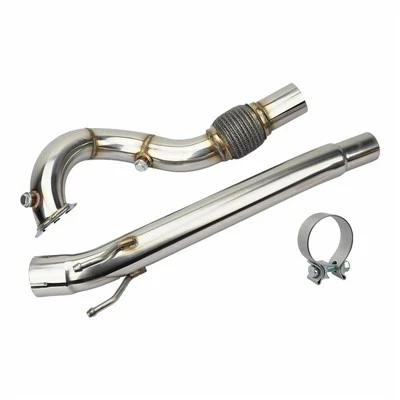
First off, let’s get the basics right: a stock exhaust manifold is what comes on your car straight from the factory. It’s bulky, cast iron, designed to be cheap and quiet—and that’s about it. It’s bolted right to the engine’s exhaust ports, basically taking all the hot, nasty exhaust gases from each cylinder and funneling them into one single pipe. Sounds simple, right? But here’s the catch: when those gases rush out of each cylinder in pulses, they create what’s called “back pressure.” A little back pressure isn’t always bad, especially at low RPMs, because it helps with scavenging (wait, we’ll get to that later). But a stock manifold? It’s way too restrictive. The pipes are short, they have weird bends, and they’re usually smaller in diameter than they need to be. So your engine has to work harder to push those gases out. That’s where an exhaust header comes in.
An exhaust header (sometimes called an exhaust manifold, but don’t mix that up—headers are way different) is a set of individual pipes, each one matching the length of a specific cylinder’s exhaust port. So if you have a 4-cylinder engine, you’ve got four separate pipes; V8s have eight, all cut to the exact same length before they merge into one collector pipe at the end. That’s the key part here—equal-length pipes. The stock manifold? Each pipe is a different length, depending on how the cylinder is oriented on the engine block. So when the exhaust pulses hit, they bump into each other, create turbulence, and that’s more back pressure.
Now, why does that matter? Let’s talk about scavenging. Think of each exhaust pulse like a wave rushing through a pipe. When that wave travels down the header pipe, it creates a slight vacuum behind it, right? If the next cylinder’s pulse comes at exactly the right time—because the pipes are the same length, so the pulses are timed perfectly—that vacuum actually helps pull the next exhaust gas out of the cylinder. That’s scavenging, and it’s a huge part of why headers make your car run better. The stock manifold can’t do that because the pulses are all messy, different lengths mean waves hit each other and kill that vacuum.
Another big one: heat. Cast iron stock manifolds hold heat like nobody’s business. Exhaust gases get super hot, and that heat transfers right into the engine bay, making the engine work harder to cool itself. Headers are usually made of stainless steel, or sometimes ceramic-coated steel or even titanium, which holds less heat. That means less under-hood heat, which is better for other parts (like your intake, or even your radiator) and also, wait for it—exhaust gases stay hotter longer. Hotter gases flow better, because they’re less dense. So they move faster through the header, which means more power. It’s a win-win.
Wait, let’s get real—headers aren’t for every car, right? I see a lot of new guys dropping $1,500 on a set of headers for their mom’s 2012 Corolla, thinking it’s gonna turn into a race car. Spoiler: it won’t. Headers work best when you pair them with other mods—like a high-flow cat, a performance exhaust system, maybe a tune. If you just slap headers on a stock car, you might see a tiny bit of power, but not nearly as much as you would if you upgrade the rest of the exhaust too. Also, for daily drivers, there’s a balance. Longtube headers (the ones with the super long pipes) are great for high RPM power, but they can make low-end torque feel a little sluggish. Shorty headers are more low-RPM friendly, which is better if you’re driving to work every day. I always tell customers: know what you use your car for before you drop the cash.
Let me also clear up a common myth: headers don’t just “make your car louder.” Don’t get me wrong, a lot of guys do it for the sound—there’s nothing like that deep, throaty roar from a set of good headers. But if you get a high-quality header, it’s not obnoxious loud (well, unless you want it to be). It’s a richer, more natural sound, because the exhaust pulses are flowing properly instead of being all backed up. The loudness comes from the exhaust system after the headers—mufflers, cats, all that stuff. Headers change the flow, not the noise level directly.
Now, from my side as a supplier: I talk to people every day who are nervous about buying headers. Is this gonna fit my car? Is it gonna be hard to install? Will it cause check engine lights? Let’s be honest, some cheap headers on Amazon fit like garbage—you spend four hours fighting with bolts, they leak exhaust, and you end up frustrated. That’s why we make sure every header we sell is precision-machined, with exact mounting flanges that match your engine’s ports. We also include all the gaskets and bolts you need, so you don’t have to run to the auto parts store mid-install. And for check engine lights? Most modern cars have oxygen sensors, and a good header will line up with the O2 sensor bungs correctly. We even have high-flow O2 sensors that work with our headers if you’re worried about codes popping up.
Another thing I love about headers? They’re customizable. If you want a ceramic coated header to resist corrosion (perfect if you live somewhere with salt on the roads in winter), we’ve got those. If you want a raw stainless steel look that will patina nice over time, that’s an option too. Titanium headers are lighter, but they’re pricey—great for race cars, not so much for daily drivers. We make all kinds for different needs, so no matter what you’re working on, there’s a header that fits.
Wait, let’s go back to the science part to make sure I’m not just spouting hype. Let’s use numbers, like gearheads do. A stock manifold might have a flow rate of, say, 800 cubic feet per minute (CFM) at mid-RPM. A good performance header? That’s easily over 1,200 CFM. More flow = less back pressure, so the engine doesn’t have to work as hard to expel exhaust gases. That means the engine can take in more air and fuel on the intake stroke, which equals more power. For most cars, you’re looking at a 10-15 horsepower gain from headers, sometimes more if you pair them with other mods. For a V8, that could be 20-30 horsepower—nothing to sniff at.
But here’s the thing: it’s not just about power. It’s about how the car feels. When you hit the gas, the throttle response is snappier. There’s no lag from backed-up exhaust gases. That’s the part that makes regular drivers go “wait, my car feels faster, even if the numbers aren’t that crazy.” I’ve had customers tell me they thought they needed a full engine swap until they put on our headers—they were shocked how much better their car drove.
I also wanna mention headers and emissions. A lot of people are scared they’ll pass inspection if they put on headers. But if you get a set of headers that are CARB-approved (or whatever your local emissions body is called), they’re totally street legal. We carry a ton of legal headers for all sorts of cars, so you don’t have to risk a ticket just to get better performance. Just make sure you check your local laws before buying—some states are stricter than others.
Let me wrap this up, because I know you’re probably thinking “alright, so when do I get mine?” Let’s recap: an exhaust header is a set of equal-length, individual pipes that replace your restrictive stock exhaust manifold, designed to reduce back pressure, improve exhaust scavenging, boost power and throttle response, and give your car a meaner sound. It’s not a magic bullet, but it’s one of the best mods you can do for your car, whether you’re a daily driver, a weekend racer, or just someone who wants their car to feel more alive.
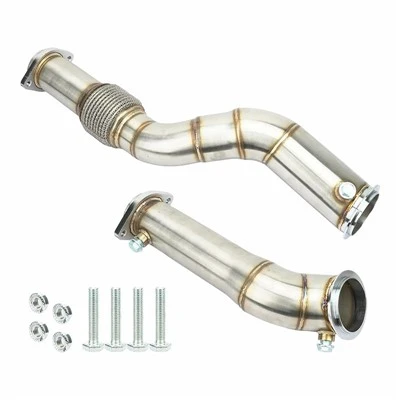
Now, if you’re ready to upgrade your exhaust, we’ve got you covered. We make headers for almost every make and model, at prices that won’t break the bank. We offer free shipping on all orders over a certain amount, and our customer support team is here to answer any questions—whether you’re wondering if a header fits your 4-cylinder or need help picking the right type for your V8. Don’t waste time with cheap, no-name headers that leak or don’t fit right. Grab a set from us, and feel the difference in your ride.
Exhaust Header References:
- Taylor, Charles F. The Internal Combustion Engine in Theory and Practice. MIT Press, 1985.
- Heywood, John B. Internal Combustion Engine Fundamentals. McGraw-Hill Education, 2018.
- Automotive Exhaust Systems: Design, Testing, and Materials. SAE International, 2020.
- “Exhaust Scavenging and Header Design.” Hot Rod Magazine, 12 Oct. 2022.
- “What Makes a Good Exhaust Header?” Car and Driver, 5 Mar. 2023.
Hangzhou Jinma Pipe Industry Co., Ltd.
As one of the most professional exhaust header manufacturers and suppliers in China, we have world-leading production equipment and strong manufacturing capabilities. Please rest assured to wholesale custom made exhaust header at competitive price from our factory.
Address: Anxi Xingang Village, Liangzhu Street, Yuhang District, Hangzhou City
E-mail: anthonya@jmexhaustpipe.com
WebSite: https://www.jmexhaustpipe.com/
