What’s up, fellow safety folks? If you’re a plant engineer, maintenance lead, or maybe just someone who’s had to sign off on a pressure system design, you know safety valves are non-negotiable—they’re the last line of defense when pressure spikes go sideways. But let’s be real: calculating their flow capacity isn’t just a number crunch. Mess this up, and you’ve got a problem that can cost downtime, damage, or worse. As a safety valve supplier, we get questions all the time: “How do I actually figure out the flow capacity my valve needs?” No fancy jargon, no confusing formulas that only make sense to a PhD—let’s break this down like we’re chatting over a coffee. Safety Valve
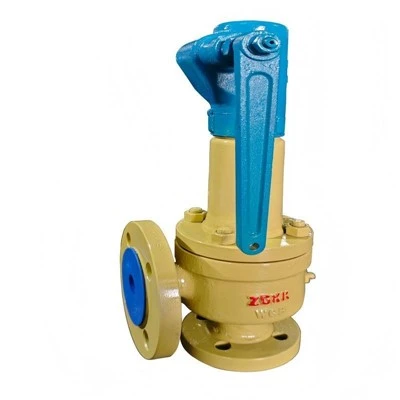
First, let’s start with the basics you can’t skip. Flow capacity for a safety valve (that’s the maximum amount of fluid it can release when it pops, right?) isn’t pulled out of thin air. It’s tied directly to the overpressure scenario your system might face. Overpressure is when pressure goes 10% above your set pressure for gas, vapor, and steam systems, or 10% above for liquid too? Wait, no—wait, let me correct that because rules differ a little by fluid. ASME’s Boiler and Pressure Vessel Code (Section VIII, if you care) lays this out, but we’ll spare you the full code name for now. The core thing: you need to identify every single possible overpressure cause before you can size the valve. Is it a thermal expansion from a hot line? A blocked outlet on a pump? A runaway chemical reaction? Each of these will give a different flow demand, so you can’t just pick a “one size fits all” number.
Let’s walk through a real example we ran last month for a food processing plant. They had a 500-gallon steam heater, and their biggest overpressure risk was a control valve failing closed—trapping steam inside, so pressure spiked fast. Their set pressure was 150 PSI, so ASME says overpressure here would be 15 PSI (10% of set), making their relieving pressure 165 PSI. Now, what fluid is that? Saturated steam. That’s key because steam flows differently than water or gas, so the formula changes.
Wait, let’s talk about the formulas—no, not the scary long ones. For any fluid, the core flow equation boils down to this: flow capacity (usually called “C” or “Kd” depending on who you ask) is a function of relieving pressure, specific volume of the fluid at relieving conditions, and the valve’s flow coefficient. For gases and vapors, there’s a limit called “choked flow”—that’s when the fluid velocity at the valve outlet hits the speed of sound, so increasing pressure further doesn’t make more flow. That’s a big one because if you’re dealing with high-pressure gas, you’ll hit choked flow before you reach the maximum relieving pressure, so you can’t just guess on pressure. For liquids, it’s simpler: liquid doesn’t compress much, so you almost never hit choked flow, so your formula is just about volume flow rate and pressure drop.
But here’s a mistake we see a lot: people forget the “specific volume” part. Specific volume is how much space a unit mass of fluid takes up. For steam, that’s easy to get from steam tables—you just look up 165 PSI saturated steam and it’s roughly 2.8 cubic feet per pound. For air or natural gas, you use the ideal gas law to adjust specific volume from standard conditions to your relieving pressure and temperature. If you mess that up, your flow number will be wrong. For example, a guy at a chemical plant tried to use standard air specific volume for his high-pressure nitrogen line, and his flow calculation was off by 25%—thankfully we caught it before he ordered the wrong valve, which would have been useless when pressure spiked.
Now, let’s get to sizing the valve itself. Once you have your required flow rate (let’s call that Q), you need to match it to a valve’s “rated capacity” (that’s the flow the valve can actually handle at its relieving pressure). Here’s where our team helps a lot—we don’t just send a spec sheet. For the steam heater example I mentioned earlier, the required flow rate was 1,200 pounds per hour of steam. We checked our valve catalog: a 2-inch safety valve with a 1-inch nozzle rated for 1,350 pounds per hour at 165 PSI would work. But wait, we also factored in the valve’s “capacity correction factor”—some valves (like balanced bellows types) have a lower correction factor because the bellows adds a little resistance. That’s another thing: if you’re dealing with dirty fluids or corrosive environments, you might need a different valve type, which affects capacity. A full-bore valve for dirty water has a higher capacity than a threaded one, for example.
Let’s talk about the two main sizing methods you’ll encounter: “conventional sizing” and “API sizing.” API 520 is the standard for sizing safety valves in refineries and process plants, right? API stands for American Petroleum Institute, and their guide is way more detailed than ASME for industrial applications. We follow API 520 Part 1 for all our sizing calculations because it accounts for real-world variables like back pressure. Back pressure is the pressure that builds up on the outlet side of the valve when it opens—if your valve is venting into a header that’s already pressurized, that will reduce the flow capacity. A lot of people ignore back pressure, and that’s a huge error. For example, if you have a valve venting to a 10 PSI header, and your relieving pressure is 165 PSI, the net pressure drop across the valve is 155 PSI, not 165. That cuts flow capacity by like 10%, so you need to adjust.
Now, let’s cover a few common myths we hear:
- “Larger valve = better.” No way. A valve that’s too big will chatter—open and close repeatedly—and that can wear out the valve seat way faster, leading to leaks. We see this all the time: someone buys a 3-inch valve for a 2-inch line because it “sounds safer,” but it will fail prematurely. We size to the exact required flow, no extra room (unless you have a known future expansion, which we account for).
- “Liquid sizing is just gallons per minute.” Almost. You also need the specific gravity of the liquid. Water has a specific gravity of 1, but if you’re dealing with a heavy oil that’s 0.9 SG, that changes the formula. Our team always asks for SG, temperature, and pressure when a customer hits us up for sizing.
- “Choked flow only happens at super high pressure.” Nope. Even at 100 PSI, a fast-moving gas can hit choked flow. For example, natural gas at 100 PSI: the speed of sound is ~1,100 ft/s, and once the fluid at the valve outlet hits that, flow stops increasing. API 520 has a simple rule of thumb: if the ratio of absolute relieving pressure to absolute upstream pressure is less than 0.5 for air, you’re choked. For steam it’s around 0.58, so that’s easy to remember.
Wait, let’s do a quick quick example to make it concrete. Suppose you have a nitrogen line at 300 PSI gauge, 100°F, set pressure 280 PSI. Overpressure is 28 PSI, so relieving pressure is 308 PSI absolute? Wait no, gauge vs absolute: always use absolute pressure for gas calculations. Oh right, another mistake: mixing gauge and absolute pressure. That throws every formula off. So 300 PSI gauge is 314.7 PSI absolute. Relieving pressure is 280 + 28 = 308 PSI gauge, which is 322.7 PSI absolute. Now, ratio of relieving pressure to upstream pressure: 322.7 / 314.7 = ~1.025, which is way above the 0.5 threshold, so not choked. So you use the unchoked gas formula. Specific volume of nitrogen at 314.7 PSI, 100°F is ~0.09 cubic feet per pound. Required flow rate for this case is 5,000 scfh (standard cubic feet per hour). Plug into API’s unchoked formula, and you get a required nozzle area of ~0.25 square inches. That matches our 1.5-inch valve nozzle, which is rated for exactly that.
Now, how do we make this easy for you? Our process isn’t just “here’s a valve.” When a customer reaches out for sizing, we ask for 4 key pieces of info first—no hoops, no long forms:
- What’s the set pressure (gauge or absolute, specify both if you can) of your system?
- What fluid are you handling (steam, air, water, natural gas, corrosive liquid—even dirty stuff, just tell us)?
- What’s the maximum required flow rate the valve needs to handle?
- What’s the back pressure on the outlet side (if any)?
Once we have that, our in-house engineers run the numbers using API 520 and ASME standards, adjust for the valve type (balanced bellows for high back pressure, conventional for low, etc.), and give you a sizing recommendation that’s actually field-proven. We don’t just rely on catalog numbers—we test every valve we sell for capacity in our lab, so the numbers on spec sheets are real, not theoretical.
Wait, let’s address a pain point: retrofitting an old system. A lot of plants have valves installed years ago that they’re not sure are sized right. We offer a free capacity check for existing valves—you send us the make, model, nozzle size, and your system specs, and we’ll tell you if it’s adequate, or what to upgrade to. No hard sell, just honest feedback because we know downtime is way more expensive than a new valve.
Another thing: thermal expansion. That’s a big one for closed liquid systems. If you have a pipe full of water that’s heated, it expands—and since liquid doesn’t compress, all that expansion has to go somewhere, which builds pressure. The safety valve here needs to handle the volume of expansion plus any liquid that might be added to the system. We see people use the wrong formula here all the time; for example, a 100-foot steel pipe full of water heated from 70°F to 200°F will expand about 0.5 gallons, so the valve needs to handle that flow. Our team uses the formula from ASME Section VIII for thermal expansion, and adjusts for pipe size and material to get the exact number.
Now, what about when you’re dealing with multiple overpressure scenarios? For example, a system that could have both a blocked outlet and a thermal spike. You have to calculate flow capacity for both scenarios and pick the higher number—can’t just average them. That’s another place we help: we can walk through every possible scenario for your system to make sure the valve is sized for the worst case, not just the most likely one.
Let’s wrap this up with a real takeaway: calculating safety valve flow capacity doesn’t have to be a headache, but it does need to be accurate. Skipping steps like accounting for back pressure, mixing up gauge and absolute pressure, or guessing at specific volume will lead to a valve that either leaks (if it’s too big) or won’t open when you need it (if it’s too small). As a supplier, our job isn’t just to sell a valve—it’s to make sure your system is safe, no mistakes.
If you’re in the middle of sizing a new valve, checking an old one, or just have a question about flow capacity, don’t overcomplicate it. Just reach out, share those 4 key specs, and our team will sort it out for you. No jargon, no hidden fees, just straight talk on what works for your system. Because at the end of the day, safety valves are there to keep people and equipment safe—so getting the flow capacity right is non-negotiable.
Ball Valve References:
- American Petroleum Institute. API Standard 520, Part 1: Sizing, Selection, and Installation of Pressure-Relieving Devices in Refineries, 11th Edition, 2023.
- American Society of Mechanical Engineers. ASME Boiler and Pressure Vessel Code, Section VIII: Pressure Vessels, 2024 Edition.
- Crocker, S., and King, R.P. Pressure Relief Devices: Design, Selection, and Testing, 3rd Edition. McGraw-Hill, 2019.
Wenzhou Starry Valve Co., Ltd.
Wenzhou Starry Valve Co., Ltd. is one of the most professional safety valve manufacturers and suppliers in China, also supports customized service with low price. Please feel free to buy the newest safety valve made in China here from our factory. Welcome to contact us for pricelist.
Address: No.4900, 3rd Road, Binhai Industrial Park, Wenzhou Economic & Technological Development Zone, Wenzhou City
E-mail: starryvalves@163.com
WebSite: https://www.starryvalves.com/
