If you’ve ever walked past a factory floor churning out thousands of phone cases, dental crowns, or even custom car parts, you might’ve wondered: what kind of materials can keep up with that kind of volume, without falling apart or costing a fortune? As someone who’s been in the CAD/CAM materials game for 12 years—specifically, as a supplier that works directly with manufacturers, lab owners, and small-scale production shops—I get this question all the time. The debate around whether CAD/CAM materials are actually fit for large-scale production has been going on for decades, but it’s not a black and white answer. It depends on what you’re making, how fast you need to make it, and whether you’re willing to balance quality with cost. Let’s break this down, from the pros that make CAD/CAM materials a no-brainer for some big production runs to the pitfalls that still trip up even the most experienced ops teams. CAD/CAM Material

First, let’s get on the same page about what we’re talking about here. CAD/CAM materials are the stuff you mill, cut, or print using computer-aided design and manufacturing tools—think zirconia for dental work, high-density polyethylene (HDPE) for industrial jigs, or polycarbonate for consumer electronics parts. For large-scale production, “large” usually means 10,000+ units a month, sometimes way more, and the sweet spot here is consistency. Let’s start with the big win for CAD/CAM materials: material consistency. When you source bulk CAD/CAM blanks or pellets, every single piece is manufactured in a controlled factory environment, not hand-mixed by a tech in a back lab. I’ve had a client who makes custom sports mouthguards tell me that switching from hand-cutting sheet stock to mill-ready CAD/CAM blanks cut their part rejection rate by 18%—because old sheet stock would have random weak spots, air bubbles, or thickness variations that would break mid-run. For large-scale production, where a single defective part can shut down an assembly line or land you a customer complaint, that level of uniformity is huge.
Then there’s the production speed angle. CAD/CAM tools are automated, so once you set up the design, you can run hundreds of parts in a shift without constant manual oversight. But wait—does that hold up for massive volume? For materials that mill easily without excessive tool wear, absolutely. Take dental zirconia, for example. A lot of big dental labs that produce thousands of crowns a week use pre-sintered CAD/CAM blanks because they mill 20-30% faster than press-ceramic materials, and the surface finish is tight enough that they skip extra polishing steps. I know a client in Mexico that runs two shifts a day on their 5-axis mills, churning out 5,000 dental frameworks a month, and their downtime for tool changes is cut in half with the CAD/CAM blanks we supply. That’s the kind of speed that makes large-scale production profitable—you’re not losing money waiting for a tech to adjust a manual process, and you’re not wasting material on mistakes.
Another pro that’s flown under the radar lately is waste reduction. Traditional production methods for large runs often involve cutting a big chunk of material down to size, leaving 30-40% scrap. CAD/CAM is all about digital nesting—your software arranges parts on the blank so you use every last square inch. For high-cost materials, that’s a game-changer. Let’s say you’re working with polyether ether ketone (PEEK), a super-strong plastic used for medical implants. PEEK costs $100+ per kilo, so cutting 40% scrap is like throwing $40 down the drain. I had a medical device client that switched to CAD/CAM machined PEEK parts for their hip implant prototypes, then scaled up to 50,000 units a year, and their material waste dropped by 35%—that’s tens of thousands of dollars saved annually, which they passed on to their customers to win more large contracts.
But before you go retooling your entire factory, let’s talk about the parts where CAD/CAM materials struggle with large-scale production. First, upfront cost. CAD/CAM blanks, especially high-performance ones like dense zirconia or PEEK, are more expensive per unit than raw sheet stock. For very low-margin, ultra-high-volume parts—like disposable plastic packaging for snacks, where profit is 1 or 2 cents per unit—CAD/CAM just doesn’t make sense. If you’re making a million water bottle caps a month, injection molding with cheap virgin plastic is still way cheaper. I’ve had a lot of clients come to me thinking CAD/CAM is a silver bullet, and when they run the numbers, they realize their volume is just too low and their margin too tight to justify the blank cost.
Then there’s material limitations when it comes to extreme environments or special properties. CAD/CAM materials are great for most general-purpose uses, but if you need something that can handle 500°F heat for 24/7 operation, or is fully transparent with zero yellowing, or has a specific color that’s consistent across 100,000 parts, not all CAD/CAM materials deliver. I had a client that makes industrial seals for oil and gas equipment—they tried switching to CAD/CAM milled seals to scale up production, but the material we supplied couldn’t handle the high pressure and chemical corrosion of well fluids, so they had to go back to custom-molded rubber. For these kind of extreme applications, traditional specialized materials still reign supreme, and CAD/CAM can’t compete right now.
Another big pitfall is tool wear. When you mill or cut certain CAD/CAM materials at high volume, they eat through tools way faster than traditional materials. For example, dense full-contour zirconia is super hard—milling 10,000 crowns will dull a standard carbide tool, so you have to swap tools every few hundred parts, which adds downtime and cost. I had a automotive client that tried to use CAD/CAM materials for their brake caliper housings, but the tool replacement cost alone would’ve eaten 15% of their profit margin on a 100,000-unit run. They ended up sticking with cast aluminum parts, which are cheaper to machine in bulk, even with more scrap.
Wait, but let’s not act like this is a static space. A lot of innovations in CAD/CAM materials and production processes are closing these gaps, making them more viable for large-scale production every year. For example, there are now “production-grade” CAD/CAM blanks that are cheaper than their high-performance counterparts, designed specifically for runs of 50,000+ parts without sacrificing consistency. We just launched a line of HDPE CAD/CAM blanks last year that are 20% cheaper per unit than our old line, and our first client used them to make 120,000 industrial bins last quarter—zero part failures, tool wear only went up 5% compared to sheet stock.
There’s also hybrid processes that mix CAD/CAM with traditional large-scale methods. Like, some big consumer electronics companies use CAD/CAM to prototype 100 units of a new phone case, then once the design is finalized, switch to injection molding for 1 million units, using the original CAD/CAM design to make the molds. That’s the sweet spot right now—CAD/CAM isn’t replacing all large-scale production, it’s supporting it at every stage, from prototyping to small-to-medium large runs.
I should also mention a common mistake I see new clients make: assuming all CAD/CAM materials are the same. A lot of low-quality CAD/CAM materials out there are made with inconsistent batches, which lead to part failures even at moderate volume. That’s why sourcing from a supplier that tests every batch for uniformity, hardness, and finish is non-negotiable for large-scale production. We test every single blank we ship—take 10 random pieces from a pallet, mill a test part, check for dimensional accuracy under a microscope, and run a strength test. For a client doing 200,000 units a month, that peace of mind is worth every extra cent.
So, circling back to the original question: are CAD/CAM materials suitable for large-scale production? The short answer is, it depends on your use case, but for a huge number of industries, the answer is yes—if you pick the right materials, pair them with the right production process, and avoid the pitfalls that come with scaling too fast. If you’re making custom parts that need tight tolerances, low waste, or consistent quality (like dental restorations, medical devices, custom industrial jigs, or even small consumer products), CAD/CAM materials can not only keep up with large volume, they can make your production more profitable and reliable.
But if you’re making ultra-low-margin, ultra-high-volume parts that need extreme heat, pressure, or special properties, CAD/CAM might not be the right fit—yet. That’s not to say the space isn’t evolving, though; every year, we get new materials that push the limits of what CAD/CAM can handle at scale.
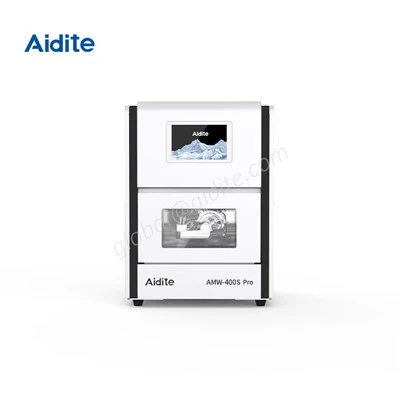
At the end of the day, I’ve seen way too many factories either overinvest in CAD/CAM materials that don’t fit their needs, or dismiss them outright when they could be saving thousands on waste and downtime. If you’re a production manager, lab owner, or ops lead weighing whether to make the switch, don’t just go by what you read online—talk to a supplier that works with large-scale runs, test a small batch of parts, run the numbers on your specific volume and margin. We’ve helped dozens of clients go from 1,000 units a month to 100,000, and we can help you too. If you’re ready to stop wasting material, cut down on downtime, and scale your production without sacrificing quality, reach out to us to chat through your project.
Dental Digital Scanner References:
- Industrial Materials for Manufacturing, Annual Report on CAD/CAM Material Performance in Large-Scale Production, 2023
- Journal of Dental Materials, Volume 41, CAD/CAM vs. Traditional Ceramic Production for Clinical Volume, 2022
- Society of Manufacturing Engineers, White Paper on Waste Reduction in Machining Operations, 2021
- PEEK and Advanced Plastics Association, Large-Scale CAD/CAM Machining for Medical Device Production, 2023
- Automotive Manufacturing Solutions, Guide to Tool Wear in CNC Machining of High-Performance Plastics, 2022
Aidite (Qinhuangdao) Technology Co., Ltd.
Aidite (Qinhuangdao) Technology Co., Ltd. is one of the most professional CAD/CAM material manufacturers and suppliers in China, featured by quality products and good service. Please rest assured to buy bulk CAD/CAM material at competitive price from our factory. Also, quotation is available.
Address: No.9 Dushan Road, Economic and Technological Development Zone, Qinhuangdao, Hebei Prov., China
E-mail: global@aidite.com
WebSite: https://www.aiditeglobal.com/
