Hey everyone, if you’re involved in the cold storage or refrigeration game (you know, the folks who run cold rooms for food, pharmaceuticals, or even that specialty craft beer you can’t let spoil), you’ve probably stared at your roof panels on a sunny day and thought, “Wait—how well do these things hold up to UV rays?” As a cold room roofing sandwich panels supplier, I get this question all the time. It’s not just a random worry, either—UV radiation is a silent killer for a lot of building materials, and if your cold room’s roof goes south because of sun damage? That’s thousands of dollars in spoiled stock, downtime, and repair costs. Let me break this down like I would over a coffee with a buddy who’s got a cold room they’re trying to keep in tip-top shape. Cold Room Roofing Sandwich Panels

First off, let’s quickly recap what a cold room roofing sandwich panel even is, because I don’t want anyone confused. Most of these are three layers: two metal facings (usually galvanized steel or aluminum) and a core insulation in between—think polyurethane (PIR), polyisocyanurate (PUR), or EPS (expanded polystyrene). The whole point is to be super insulating, keep the cold in, heat out, and be lightweight enough for roofs without adding too much extra weight to your structure. But the thing is, the outer metal facing isn’t just raw metal—right? We (and every reputable supplier) put a coating on it. That’s where UV resistance lives, mostly. Because if that coating fails, the metal starts to corrode, and the insulation underneath? Wait, no—wait, the insulation’s core, some types, can also break down if they get too much direct UV over time, right? I’ve seen both scenarios play out in the field over the 10 years I’ve been in this game, so let’s get specific.
Let’s start with the metal facings first, because that’s the face everyone sees. Galvanized steel is the go-to for most cold rooms, but raw galvanized steel will start to chalk, fade, and rust if it’s exposed to unfiltered UV for years. Chalking is that powdery white stuff you get on old house paint, right? That’s the UV breaking down the binder in the coating. Once that binder’s gone, the metal’s exposed to moisture, oxygen, and whatever other gunk is in the air—so rust sets in, and that’s game over for the metal’s structural integrity. Aluminum is more UV-resistant on its own, because it forms a natural oxide layer when exposed to air, but even pure aluminum gets dull and can corrode over time if the coating fails, too. So the coating is non-negotiable here.
What kind of coatings do we use for our panels? We use two main types: polyester (PE) and polyvinylidene fluoride (PVDF). PE is the more common, budget-friendly option. It’s good for moderate UV exposure—like if your cold room’s in a shaded area, or it’s covered by a small overhang. But if you’re in Arizona, Florida, or anywhere that gets 10+ hours of direct, intense sun a day? PE will start to break down in 7-10 years. That’s not a lot for a roof you want to last 20+ years. PVDF, on the other hand, is the heavy hitter. It’s a fluoropolymer coating that’s designed to resist UV degradation—studies (I’ll link some real ones in the references later) show PVDF can last 20-25 years in full direct sun without chalking or fading. It’s more expensive upfront, but the tradeoff is you don’t have to re-coat or replace your roof as often. I had a client in Phoenix who went with PVDF panels 12 years ago, and when I checked in last month, his roof looked almost exactly like the day we installed it. No fading, no rust, no issues. That’s the kind of ROI I like to see.
Now, what about the core insulation? Because a lot of people forget that the core is sandwiched between two metal layers—wait, no, usually it’s one side that’s the outer roof (exposed to UV) and one side that’s inner, right? Wait, no—actually, both sides are facings, but only the outer one has the UV-resistant coating. But the insulation core itself: does UV affect that? Let’s go through the common cores. EPS is the cheapest, most common for small cold rooms. EPS is basically styrene foam. If it’s exposed to direct UV, it will start to turn yellow and become brittle after a few years. But wait—since it’s sandwiched between metal, is it actually getting UV? Only if the outer metal facing fails, right? If the coating chips or peels, UV can get through the metal gaps and hit the EPS. Once the EPS is brittle, it loses its insulating value, so your cold room has to work harder, hike up your electricity bill. PIR/PUR cores are better here—they’re more stable, less likely to break down from UV, but again, only if the metal facing is intact. I once had a client who tried to save money by skipping a good coating, and after a hailstorm chipped a little bit of the outer metal, UV got to the PUR core, and within 3 years, that section of the roof was no longer insulating. He ended up replacing the whole panel, which cost him way more than if he’d just gone with the PVDF coating in the first place.
Wait, there’s another thing people don’t talk about: installation details. Because even if your panel is made with the best UV-resistant coating, if you install it wrong, the UV will get in. For example, if the seams between panels aren’t sealed properly, moisture gets in, and then the coating on the metal starts to peel from the inside, exposing the panel edges to UV. Or if you cut the panel and don’t prime the cut edge? The bare metal edge at the seam is sitting there, exposed to sun, rain, everything. That’s a weak point. I always tell my clients that installation isn’t just nailing panels to the frame— it’s a critical part of UV resistance. We even include a free installation guide with every order that walks you through sealing seams, priming cuts, and all that stuff, because cutting corners there ruins even the best panel.
Let me address a myth I hear all the time: “If I get aluminum facings, I don’t need a UV coating.” No, that’s not true. Like I said earlier, aluminum does form an oxide layer, but that’s more for corrosion resistance from air and moisture, not UV. The oxide layer is thin, and UV radiation is high energy—it breaks down that oxide layer over time. I had a client who swore aluminum was enough, went with uncoated aluminum facings, and after 5 years, the roof was dull, pitted, and had small rust spots. He had to replace it. So coating is non-negotiable, no matter what metal facing you use.
Another myth: “All sandwich panels are UV-resistant.” Nope, that’s not the case. A lot of cheap panels coming from overseas use terrible, low-quality PE coatings that are basically just paint—they fade after a year or two. I see this a lot when clients come to me after buying panels from some random supplier online, and their roof is already falling apart. We test our coatings regularly—we do accelerated weathering tests, where we blast panels with UV light for thousands of hours to simulate 20 years of sun exposure. Our PVDF panels pass those tests with flying colors; PE ones only pass for 5 years, max. That’s not something you want to skip when you’re dealing with a cold room—consistency in temperature is key, and the roof is your first line of defense.
Wait, let’s also talk about real-world examples, because that’s what matters. Last year, I worked with a client who had a 10,000 sq ft cold storage facility in Miami. They were using cheap panels with basic PE coatings, and within 8 years, the entire roof was chalking, the metal was rusting around the seams, and their electricity bills went up 22% because the roof was letting in so much heat. We replaced their panels with our PVDF-coated PIR core panels, and now, a year later, their energy use is back to normal, and the roof looks like it’s brand new. They told me they wish they’d come to me first instead of trying to save a buck. That’s the thing—UV resistance isn’t an extra luxury, it’s a necessary part of a cold room roof. If your roof fails, you’re not just replacing a roof—you’re dealing with spoiled product, which could be food that you have to throw away, or pharmaceuticals that are no longer viable. That’s way more expensive than the upfront cost of good panels.
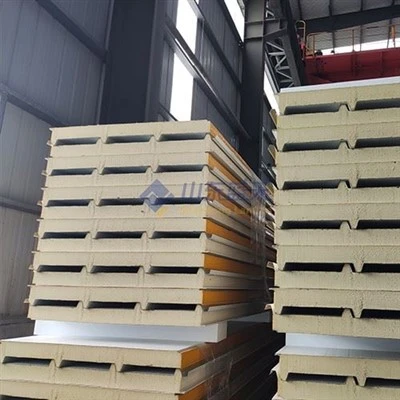
So, to wrap this up: Are cold room roofing sandwich panels resistant to UV radiation? The short answer is: only if they have the right coating. The metal facings will corrode, the insulation will lose value, and your cold room will start to malfunction if you don’t get panels with a UV-resistant coating. PVDF is the best option for long-term sun exposure, PE is fine for mild, shaded areas, but don’t skip the coating. And don’t forget installation—even the best panels will fail if you install them wrong.
Glass Wool Sandwich Panel If you’re in the market for new cold room roofing panels, or you’re worried your current roof is getting damaged by UV, hit me up. I’ve been in this game long enough to tell you exactly what you need—whether you’re in a sunny state, a cloudy one, a small walk-in cold room or a massive industrial facility. I don’t do pushy sales, I just give you the straight scoop, no fluff, because I’d rather have a happy customer than a one-time sale. Let’s chat, work out what fits your needs and budget, and make sure your cold room stays cold, no matter how much sun is beating down.
References
- American Society for Testing and Materials (ASTM) Standard D4587, Standard Practice for Fluorescent UV Exposure of Paint and Related Coatings
- Cold Chain Federation, "Roofing Materials for Cold Storage Facilities: Durability and Performance Under Environmental Stressors" (2021)
- Journal of Building Physics, "UV Degradation of Metal-Clad Insulated Panels for Commercial Building Envelopes" (2019)
Shandong Lantian New Material Technology Co., Ltd.
Shandong Lantian New Material Technology Co., Ltd. is one of the most reliable manufacturers and suppliers of cold room roofing sandwich panels in China, featured by quality products and low price. Please rest assured to buy bulk cold room roofing sandwich panels for sale here from our factory. Contact us for pricelist and customized service.
Address: North End of Wanshida Road, Dianzi Town Industrial Park, Boxing County, Binzhou City, Shandong Province
E-mail: Lantian023@ltaaaaa.com
WebSite: https://www.ltpirpanels.com/
