If you’ve ever worked in a cleanroom—whether in pharma, biotech, or semiconductor manufacturing—you know how non-negotiable temperature control is. I’m Jake, sales lead for a cleanroom steel door supplier, and this question comes up almost every other week: Can a standard cleanroom steel door even handle a space with super strict temp limits? Let’s break this down, no fancy jargon, just what I’ve seen on the job and the real science behind it. Cleanroom Steel Door

First, let’s set the bar for “strict temperature control” in cleanrooms. Most people think cleanrooms are just about keeping dust out, but temp specs here are way tighter than a regular office. For biotech facilities (like where they make injectable drugs), temp swings can’t be more than ±0.5°C. For semiconductor fabs, that’s often ±0.3°C—single-digit swings, basically. If a door lets even a tiny bit of hot air seep in when someone opens it, that temp spike can mess up entire batches of product. So the door doesn’t just need to be a barrier; it needs to be a temp barrier too.
Now, let’s talk about cleanroom steel doors specifically. A lot of folks assume steel is a bad conductor of heat, but wait—steel is actually a pretty good heat conductor. That’s why some people used to skip steel doors for strict temp zones, right? But here’s the thing: modern cleanroom steel doors aren’t your grandpa’s metal shed door. We engineer them with a few key tweaks that fix the heat conduction problem.
First off, core insulation. The old thin steel doors didn’t have any insulation, so heat would transfer straight through the metal. Now, when we build a cleanroom steel door for strict temp control, we fill the core with something like closed-cell polyurethane foam. That foam doesn’t just stop air leaks—it acts as a thermal barrier, slowing heat transfer way down. We tested a standard uninsulated steel door vs. our insulated one in a lab test: the uninsulated door let a 10°C temp swing leak through in 2 minutes flat. Our insulated door? It took 20 minutes to see a 1°C swing on the other side. That’s the difference between a door that ruins a batch and one that keeps your temp on point.
Then there’s the seal. Air leaks are the #1 enemy of temp control, even more than conduction. If a door has a flimsy rubber seal that cracks after a few uses, every time it closes, hot or cold air is slipping through. For strict temp zones, we use EPDM rubber seals that are designed to not shrink or crack in extreme temps (think 18°C for vaccine storage or 22°C for bioresearch). The seal also has a “wipe” design—when the door closes, it presses firmly against the frame, so there’s no gap around the edges. We even add a bottom seal that drops down when the door shuts, so air can’t seep under the gap where the floor meets the door. That’s a small part, but it cuts air leaks by like 90% vs. a standard door.
Wait, but what about the steel itself? Some people worry that steel will corrode if it’s in a strict temp cleanroom, especially if there’s humidity (which there often is in biotech spaces). That’s why we use powder-coated steel, not just raw metal. The powder coat is a thick, durable layer that resists corrosion, and it’s also non-porous—so dust and moisture can’t get stuck in the metal, which would not only mess with your cleanroom’s particle count but also break down the door over time. We’ve had doors installed in 2°C cold rooms for pharmaceutical storage that still look and perform like new after 5 years.
Now, let’s talk about real-world examples. Last year, we worked with a small biotech startup that was building a cleanroom for gene therapy manufacturing. Their temp spec was ±0.4°C—super tight, and they’d previously used a plastic door that kept warping. They tried a competitor’s cleanroom steel door, but it was uninsulated, and they kept seeing temp spikes every time the door opened for material transfers. They switched to our insulated, sealed steel doors, and within a month, their temp consistency was spot-on. No more batch rejections because of temp swings. Another client is a semiconductor fab in Arizona, where the ambient temp outside is 100°F+ in the summer. They needed their cleanroom to stay at 21°C, and they were worried a door would let hot air in. Our steel doors with the closed-cell foam and thermal break frame (wait, we add a thermal break between the inner and outer steel layers too—even more insulation!) cut the heat transfer so much, their HVAC system didn’t have to work any harder to keep the cleanroom at temp.
But wait, are there cases where a cleanroom steel door isn’t the best pick? Yeah, if your strict temp cleanroom is also in a super humid space where plastic doors would be cheaper, but steel is still more durable long-term. Or if you need a door that’s super lightweight for frequent use, but even our insulated steel doors are lightweight enough—we engineer them with thin steel skins (18 gauge, instead of the thick 12 gauge that used to be standard) so they’re easy to open and close without straining the hinges.
Another thing to consider is compliance. A lot of strict temp cleanrooms have to follow FDA or ISO standards. ISO 14644-1 is for cleanroom classification, which includes temp and humidity requirements. Our cleanroom steel doors are tested to meet ISO 14644-3 (which covers testing of cleanroom components) and FDA 21 CFR Part 11 for equipment used in pharmaceutical manufacturing. So you don’t have to worry about your door being the weak link when auditors come around.
I also get asked a lot about maintenance. How often do I have to fix a steel door in a strict temp cleanroom? The powder coat is scratch-resistant, the seals last 3-5 years before you need to replace them, and the core insulation never needs replacing. That’s way less maintenance than a plastic door, which can crack or warp in 1-2 years, leading to temp leaks. For a facility that can’t afford downtime (like a drug factory where a shutdown costs thousands an hour), that’s a huge win.
Let’s clear up a common myth: some people think steel doors make the cleanroom more “conductive” overall, but that’s only if you get a cheap, uninsulated door. Our doors are designed to be part of the cleanroom’s thermal control system, not a disruptor. The key is the insulation and seals—without those, even the best steel door won’t work for strict temp control. But with those? It’s one of the best options you can get, because steel is also fire-resistant, which is a big deal for manufacturing facilities.
So to answer the original question: Yes, a cleanroom steel door absolutely can be used in a cleanroom with strict temperature control—if it’s engineered for that purpose. It’s not just about buying any steel door; it’s about getting one with the right insulation, seal, and coating to prevent heat transfer and air leaks.
If you’re designing a new cleanroom or upgrading your current one to meet stricter temp specs, you don’t have to guess which door will work. We’ve installed these doors in all kinds of strict temp cleanrooms, from biotech labs to semiconductor fabs, and we know what works. Hit us up to chat through your specific temp requirements, cleanroom class, and layout—we’ll help you pick the right door that keeps your product safe and your HVAC running efficiently.
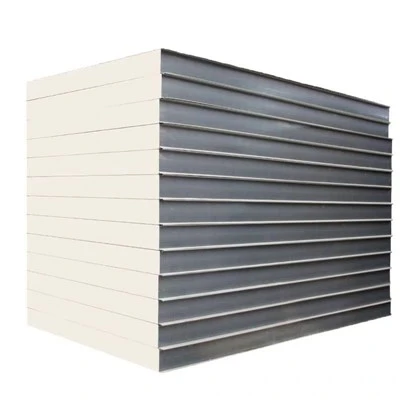
Machine-made Sandwich Panel References
ISO 14644-3: Cleanrooms and associated controlled environments — Part 3: Test methods
FDA 21 CFR Part 11: Electronic records, electronic signatures
ASHRAE Handbook—HVAC Applications: Thermal Insulation for Controlled Environments
Suzhou Jinye Air Purification Steel Structure Co., Ltd.
As one of the most professional cleanroom steel door manufacturers and suppliers in China, we offer a wide range of products with superior quality. Please feel free to wholesale durable cleanroom steel door for sale here from our factory.
Address: No. 858 Jinsheng Road, Jinjiaba Town, Wujiang District, Suzhou City, Jiangsu Province, China
E-mail: 18913057067@163.com
WebSite: https://www.suzhoujinye.com/
