Hey there! If you’ve ever worked with electrical systems, you’ve probably found yourself squinting at copper bars wondering, “Wait, does a thicker bar really carry more power than a skinnier one?” As someone who’s been in the copper bar game for over a decade—helping electricians, engineers, and even hobbyists pick the right parts for their projects—I get this question all the time. Let’s break this down like we’re chatting over coffee, no stuffy textbook jargon, and I’ll throw in some real-world stuff from working with actual copper bars. Copper Bar
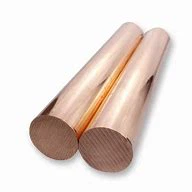
First off, let’s get one thing straight: copper is the gold standard (pun totally intended) for electrical conduction. It’s way better than aluminum for most jobs because it’s more conductive, easier to bend, and less prone to corrosion. But here’s the thing that trips people up: size does matter—at least when it comes to cross-sectional area. The cross-sectional area of a copper bar is basically how much “copper meat” you have when you cut it straight across, like slicing a hot dog. The bigger that number, the more current it can carry—simple as that. But let’s dig into why, because it’s not just a random rule.
Think of electrical current like water flowing through a pipe. If you have a tiny pipe, only a little water can squeeze through at once, right? Too much, and the pipe bursts. Same with copper bars: each amp (that’s the unit for current) needs a little space to move without overheating. The cross-sectional area is that space. For example, a 10mm² (that’s millimeters squared) copper bar can handle around 57 amps in normal residential wiring. But bump that up to 25mm², and it jumps to about 101 amps—nearly double. Why? Because more copper means more paths for electrons to flow, so less resistance. Resistance is the villain here—it’s what turns electricity into heat, which is bad news. If a bar is too skinny for the current it’s carrying, it’ll overheat, melt insulation, or even cause a fire. I’ve seen this firsthand with a customer who tried to use a way too thin bar for a commercial panel upgrade—they ended up having to re-do the whole thing because the bar burned through after a few weeks. Oops.
But wait, it’s not just about the area. There’s also “skin effect” to throw into the mix, especially for AC (alternating current) which is what most buildings use. When AC flows, electrons tend to hang out near the outer edge of the copper bar, not the middle. So for really thick bars, the effective conductive area is a little less than the actual cross-section. That’s why sometimes super thick bars are hollow—we can save on material and get almost the same current-carrying capacity. But for most jobs, especially in residential or small commercial, skin effect is negligible unless you’re dealing with current over 1000 amps or frequencies higher than 60Hz. I mention this because it’s a common myth that you just go as thick as possible, but sometimes a smart size pick avoids waste and cost—something I always help customers with.
Now, let’s talk real-world numbers, because I know you guys love hard data. For bare copper bars (no insulation, common in bus bars and power distribution), here’s a rough guide we use at our shop: a 1/4-inch thick, 1-inch wide bar (that’s roughly 6.4mm² cross-section) handles ~100 amps. A 1/2-inch thick, 2-inch wide bar (25.8mm²) does ~250 amps. A 1-inch thick, 4-inch wide bar (129mm²) cranks out ~800 amps. These are for ambient temperature around 30°C (86°F)—if it’s hotter, like in a cramped utility closet, you need to size up 10-15% to keep things from overheating. I once had a customer in Phoenix who skipped that step—his panel was in a garage that hit 110°F in summer, and his bar ran 20 degrees too hot. We swapped him to a thicker bar, and he’s had no issues since. That’s why I always emphasize temperature too—cross-sectional area isn’t a one-size-fits-all number.
Another thing people miss: how the cross-sectional shape matters. Wait, shape? Yeah. A rectangular bar is way more efficient at heat dissipation than a round one. More surface area means more heat can escape into the air, so you can carry more current for the same amount of copper. That’s why most bus bars are flat rectangles, not circles. We see this all the time—when a customer comes in, sometimes they think a round bar with the same area is equivalent, but it can handle 15-20% less current because it traps more heat. I explain that every time, because saving a few bucks on a round bar now can lead to big problems later.
Now, as a copper bar supplier, how do we apply this? It’s not just about cutting bars to a size. We have to make sure the cross-sectional area matches the exact application. For example, a EV charging station needs a bar that can handle high current fast charges—so we use a thick, wide rectangular bar to keep resistance low. A small solar inverter might need a smaller bar because the current is lower. We do a free consultation with every customer to figure out their needs—no upselling a huge bar if they don’t need it, no underselling a small one that’ll fail. Last month, a startup doing mobile power units came to us thinking they needed a 50mm² bar, but after checking their design, we found a 35mm² was enough, saving them over $200 per unit. That’s the kind of value we care about, not just making a sale.
Wait, let’s address a common mistake people make: using stranded wire vs. solid copper bars. Stranded wire is good for flexibility, but a solid bar with the same cross-section has lower resistance. Because stranded has tiny gaps between the wires, so electrons bump into each other more. So if you’re switching from wire to a bar, you might need a slightly smaller bar than the wire equivalent. We always provide a comparison chart to avoid that confusion—no guessing work here.
Let’s also talk about the long game. A copper bar with the right cross-sectional area will last way longer than one that’s too small. Corrosion is a factor, but if it’s sized correctly, the heat damage that leads to corrosion is minimal. We use electrolytic copper for all our bars—it’s 99.95% pure, so it’s less prone to tarnish and has maximum conductivity. I tell customers that skimping on copper quality alongside size is a double whammy—even a big bar made from impure copper will have more resistance and overheat faster.
So to wrap this up in plain terms: cross-sectional area is the biggest factor in a copper bar’s current-carrying capacity, but it’s not the only one. You have to consider temperature, AC vs DC, shape, and copper quality. As someone who’s seen both good and bad installs, I can’t stress enough how picking the right size saves you money, time, and safety.

If you’re working on a project right now and aren’t sure what size copper bar you need, hit us up for a chat. We’ll walk through your specs, give you the right size, and even help with custom cuts if you need something specific. No pressure, just real advice from people who’ve been in this for years. Let’s make sure your next electrical setup runs smoothly, not into problems.
Copper Bar References:
- Electrical Transmission and Distribution Reference Book, Westinghouse Electric Corporation.
- National Electrical Code (NEC), Article 310 for Conductors.
- Copper Development Association (CDA) Data on Electrical Conductivity of Copper.
- "Electrical Resistance of Conductors", R.S. Robins, Journal of Electrical Engineering Education.
Gnee Steel (Tianjin) Co., Ltd.
Gnee Steel (Tianjin) Co., Ltd. is one of the leading copper bar manufacturers and suppliers in China. We warmly welcome you to buy discount copper bar for sale here from our factory. All our products are with high quality and competitive price. Contact us for more cheap products.
Address: No.4-1114, Beichen Building, Beicang Town, Beichen District, Tianjin, China
E-mail: sales@gneemetal.com
WebSite: https://www.chinacopperalloys.com/
