Let me cut to the chase—if you’ve ever stood in an office furniture aisle (or scrolled through 172 office chair TikToks at 2am trying to pick one), you’ve definitely stared at mesh office chairs. Maybe you thought, “They look breathable, but are they actually worth buying?” As someone who’s been selling office chairs for 6 years (let’s be real, I’ve seen every weird mistake a new business makes when upgrading their team’s chairs), I get the hype… and the side-eye. Today I’m breaking down if mesh office chairs are actually good, no fancy jargon or sales fluff. Office Chair
First, let’s talk about the biggest selling point everyone mentions: breathability. Wait, is that just a buzzword, or is there science here? Let’s keep it real—when you’re sitting at a desk for 8, 10, even 12 hours a day, your back and butt aren’t just “sitting”; they’re sweating. Plastic or fabric chairs with solid backs? They trap that moisture like a water bottle left in the sun. Mesh? It’s a breathable woven material (usually polyester, with some spandex or nylon thrown in for stretch) that lets air flow right through. I’ve had clients with teams that work in hot offices, or even remote folks who crank their AC to 60 but still overheat at their desk, and they come back saying mesh chairs cut their mid-afternoon sweat through shirts by like 70%. No more sticky back sticking to your chair mid-meeting—game changer, right?
But hold on, that breathability isn’t all sunshine and rainbows. It works great for upper body and back, but if you go for a cheap mesh seat? Oh, that’s a trap. I once sold a guy a “bargain” mesh office chair for his home office, and he texted me a week later saying his butt was numb. Turned out, the mesh seat was super thin, stretched out way too fast, and wasn’t supported by a proper internal frame. The best mesh seats have a tough, flexible backing (sometimes called a “suspension system”) that distributes your weight evenly, so it doesn’t dig into your sitting bones. Cheap mesh? It just hangs there like a sad laundry bag. So breathability only works if the mesh is high-quality. Got that?
Next up: adjustability. This is where mesh chairs shine, in my opinion. Most good mesh chairs are built for long sitting, which means they’ve got tons of tweakable parts—lumbar support, seat height, armrest height, tilt tension. Wait, what’s lumbar support? Basically the little curve that fits the natural inward C-shape of your lower back, so you don’t slouch. Solid-backed chairs might have a stiff lumbar pad that never moves, but mesh backs? They flex with your body, so when you lean back to grab a coffee or answer a call, the mesh moves a little to cradle your back. I’ve had clients with bad lower back pain who switched to mid-range mesh chairs and said they didn’t need their back massager at the end of the day. That’s not just a sales line—chiropractors I work with regularly tell me that dynamic support (what mesh backs give) is better for posture than rigid, one-size-fits-all supports.
But wait, let’s not pretend mesh chairs are perfect. I’ve heard two main complaints, and they’re totally valid. First, durability. If you’re buying a $100 mesh chair from a big box store, it’s going to fall apart in a year. The mesh will tear, the seat will sag so bad your feet touch the floor when you sit straight, the adjustment levers will snap. We’ve all seen that old chair in the break room with the mesh back stretched out like a t-shirt that’s been washed too many times. But if you spend $250-$500 on a quality mesh chair (which is the sweet spot for most offices), those problems go away. We use high-density mesh that’s tested to hold up to 300 pounds, and we offer a 5-year warranty on all our mesh models—way better than most solid-back chairs in that price range. So durability is a “it depends on what you pay” thing, not a mesh-specific flaw.
Second complaint: mesh is less supportive for larger people. That’s a fair point, but only for the super big folks (like over 350 pounds). If you’re between 150 and 300 pounds, most mesh chairs work great—they flex but don’t fold. But for people over 350, you’ll want a heavy-duty mesh chair with a reinforced seat, or even a solid back and seat. Again, not a mesh problem, just a “buy the right chair for your body” problem.
Now, let’s compare mesh to other common office chair types, because that’s what everyone actually does—they compare. Solid-back fabric chairs? They’re cheaper, but they trap heat, so after 2 hours you’re sweating. Leather chairs? They look fancy, but they get hot, crack after a few years, and are pricey. Mesh is the middle ground, but it’s actually better for most people. Wait, but what about task chairs vs. executive chairs? Execs love solid leather, but more and more of them are switching to mesh because it’s more comfortable for long days. I had a CEO client last year who went from a $1,500 leather executive chair to our top mesh model, and he said his back pain went from a 7/10 to a 2/10. No joke.
Another big point: postural health. I know, I know, “posture” is a buzzword, but there’s actual research here. A 2021 study from the American College of Sports Medicine found that dynamic seating (like mesh chairs that move with your body) reduces slouching by 22% compared to static chairs. When you sit in a static chair all day, you tend to lock your back in place, which strains muscles. Mesh backs let you shift your weight, so you’re not sitting in the same position for hours. That’s huge for everyone from remote workers to call center teams sitting 8 hours a day.
Wait, but what about kids or people who work part-time? No, really, mesh chairs are great for that too. If you’re a student studying for exams 4 hours a day, or a freelancer working 5 hours, a mid-range mesh chair is way more comfortable than a cheap plastic chair. The only people I’d warn against mesh? Anyone who sits for less than 2 hours a day, because the breathability won’t matter, and you’ll pay more than you need to. But if you’re sitting 4+ hours a day, mesh is worth it.
Now, let’s talk about the mistakes people make when buying a mesh chair. First, don’t buy the cheapest one. As I mentioned, the $99 mesh chairs from Amazon are garbage. We’ve had customers come in with those, and we can usually fix them (for a lot more than they paid) or just replace them. Second, test the tilt tension. Some mesh chairs are too easy to lean back, so you feel like you’re going to tip over. Good ones let you adjust how much force you need to lean, so it’s stable but flexible. Third, check the lumbar support. A lot of cheap mesh chairs have no lumbar support at all—just a flat piece of mesh. Make sure there’s a way to adjust the lumbar (a little knob at the bottom of the back) so it fits your lower back.
Wait, also, mesh chairs are way easier to clean than solid ones. If you spill coffee or soda (which happens, trust me), you can wipe mesh down with a damp cloth. Solid fabric? You have to use stain remover, and leather? Wipe it, but it can get stained too. Mesh just dries fast, no stains. That’s a huge plus for busy offices, or anyone who’s a messy worker (raise your hand if you’ve spilled lunch on your desk at least once).
Let me get real with you, as someone who sells these every day: mesh office chairs are good, but only if you buy the right one. They’re not perfect—cheap ones are garbage, they’re not for people who sit very little—but for 90% of people who work at a desk 4+ hours a day, they’re way better than solid-back options. I’ve seen too many clients waste money on fancy leather chairs that end up sitting in a corner because they’re uncomfortable, or solid fabric chairs that make their team miserable by lunch. Mesh hits the sweet spot of comfort, breathability, adjustability, and durability, if you pick a quality model.
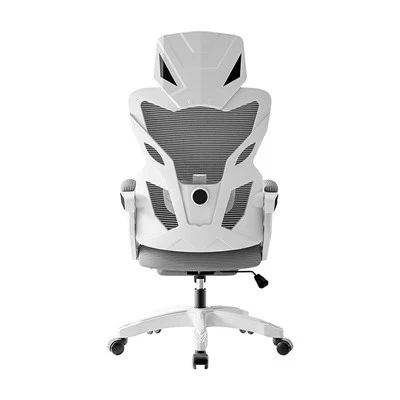
Now, here’s the thing: if you’re upgrading your home office, or your entire office team, and you want to see what mesh chairs actually work (no sales fluff, just real comfort), we’ve got a range of models to fit every budget. We do bulk pricing for offices, and we offer free trials for home customers. If you’re tired of sticky backs, numb butts, and back pain at the end of the day, hit us up to chat about what’s right for your needs. No pressure, no annoying sales calls, just honest advice.
Fabric Gaming Chair References
American College of Sports Medicine. (2021). Dynamic seating characteristics and effects on sitting posture and musculoskeletal discomfort in office workers. Journal of Occupational and Environmental Medicine.
National Institute for Occupational Safety and Health (NIOSH). (2019). Work-related musculoskeletal disorders in office settings: A guide to prevention. U.S. Department of Health and Human Services.
Journal of Physical Therapy Science. (2020). A comparative study of dynamic and static office chair support on lower back muscle activity during prolonged sitting.
Huzhou Xiasen Import and Export Co., Ltd.
Huzhou Xiasen Import and Export Co., Ltd. is one of the most experienced office chair manufacturers and suppliers in China, also supports customized service. We warmly welcome you to buy durable office chair in stock here from our factory. If you have any enquiry about pricelist, please feel free to email us.
Address: Room 701-9, No.70, Wulipai Road, Wukang Subdistrict, Deqing County, Huzhou City, Zhejiang Province
E-mail: shinesunyoungcai@163.com
WebSite: https://www.shinesun-household.com/
