If you’ve ever worked with vertical injection moulding machines, you know the whole process lives or dies by the tiny, boring parts you barely notice until something goes wrong. I’ve been supplying these Specific Vertical Injection Moulding Machines (we just call them SVIMMs for short) for over a decade, and trust me—90% of the “machine breakdowns” our customers blame on the hardware are just wrong screws holding it together. No cap, it’s that simple. Picking the right screw isn’t a guessing game, either—there’s a solid formula tied directly to what your SVIMM is doing, what material you’re running, and how heavy your production runs are. Let’s break this down like we’re chatting over coffee, no jargon overload, and save you the headache of downing an entire pallet of bad screws. Specific Vertical Injection Moulding Machine
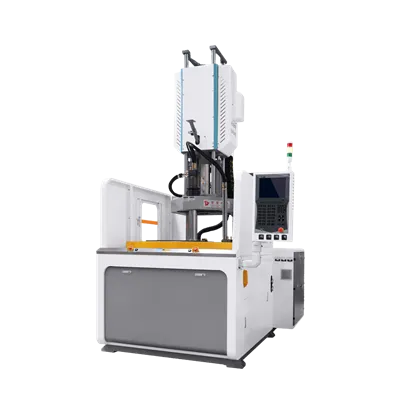
First off, let’s get one thing straight: not all screws are created equal for vertical machines. Horizontal injection moulders work differently—they shoot material horizontally, so their screws have to handle different torque and pressure. Vertical machines? They’re usually fixed in a vertical orientation, often used for insert moulding, overmoulding, or parts that need extra precision (think tiny medical components or automotive inserts). That vertical angle puts way more downward force on the screw, plus the hopper is sitting right on top, so heat transfer and material flow aren’t the same as horizontal rigs. I see so many new operators grab a random off-the-shelf screw because it fits the machine’s flange size, and a week later they’re dealing with material degradation, stuck inserts, or a screw that’s stripped mid-run. Avoid that.
Let’s start with the big one: material of the screw. This isn’t just “stainless steel or no”—your choice here ties directly to the plastic (or other polymer) you’re running and how corrosive it is. If you’re processing standard plastics like PP, PE, or ABS, a regular tool steel screw works fine. It’s durable, holds its shape, and doesn’t cost a fortune. But if you’re running anything with additives—glass fiber, carbon fiber, flame retardants, or even food-grade materials with special coatings? You need a screw made of hardened stainless steel, maybe even with a nitrided or chrome-plated surface. Wait, let me give you a real example: last year a customer brought in a bunch of broken screws after running glass-filled nylon on a generic horizontal screw in his SVIMM. The glass fibers wore down the soft steel in 2 weeks, and the screw’s flight path was so rough it left streaks on every part. Switched to a nitrided steel screw we supply with our SVIMMs, and he hasn’t had an issue since 18 months later. Oh, and if you’re working with PVC or other corrosive plastics, skip the regular stainless—go with a high-grade H-13 tool steel, it’s way more resistant to chemical breakdown.
Next up: screw diameter and L/D ratio (yes, that’s length to diameter, don’t panic). This is where it gets specific to your SVIMM’s model and production goals. Let’s keep numbers loose so it’s not boring. If your machine is a small benchtop SVIMM for prototype runs (10-50 parts a day), you don’t need a giant screw. A smaller diameter (like 20-30mm) with an L/D ratio of around 16:1 to 20:1 works. Why? Smaller screws melt material faster for short runs, and the shorter length means less chance of material sitting in the barrel too long and burning. But if you’re running a heavy-duty vertical machine for high-volume production (10,000+ parts a day), you need a bigger diameter (40-80mm) with an L/D ratio of 22:1 to 26:1. That longer screw lets the material shear more evenly, melts consistently, and handles the higher pressure needed for thick parts. I always tell customers to check their SVIMM’s manual first for the recommended L/D, but if you’re running non-standard materials (like bioplastics), bump the L/D up by a few points—bioplastics need more time to melt uniformly, so a longer screw helps a ton.
Wait, another key point: screw flights. The shape of the grooves on the screw (flights) matters way more than most people realize for vertical machines. Since your screw is sitting straight up, material has to flow down from the hopper, melt, and shoot out the nozzle at the bottom. If the flights are too shallow, material doesn’t get enough friction to melt evenly, and you’ll get cold spots in your parts. If they’re too deep, you’ll end up with air bubbles and inconsistent shot sizes. For insert moulding (super common with vertical machines), you want flights that are slightly shallower at the nozzle end—this gives you tighter control over the shot volume, so you don’t spill plastic around the insert. I once had a customer making tiny metal inserts for phone chargers who was getting 1 in 10 parts with extra plastic flashing around the insert. Switched him to a screw with tapered flights at the tip, and flashing dropped to less than 0.5%—game changer.
Then there’s the check ring and non-return valve. Yeah, those are part of the screw assembly, and they’re just as important as the screw itself for vertical machines. The vertical orientation means gravity is working against you here—if your check ring doesn’t seal tight, melted plastic will flow backward up the screw between shots, messing up your shot size. For high-pressure runs, go with a spring-loaded non-return valve instead of a ball type—spring-loaded ones seal better under the constant downward force of vertical machines, so less material waste. I can’t tell you how many times I’ve gotten a call from a customer whose “screw issue” was actually a cheap ball check ring that couldn’t hold pressure. Save yourself the hassle and spring for the good one.
Also, let’s talk about wear and maintenance. If you’re running abrasive materials (glass-filled, carbon-filled), your screw is going to wear out—no way around it. So when you’re picking a screw, think about how easy it is to replace and maintain. All the SVIMMs we supply come with quick-change screw assemblies, so operators don’t have to disassemble the whole barrel every time they swap materials. If you’re buying a third-party screw, make sure it’s compatible with your SVIMM’s barrel flange—some cheap screws have off-size flanges that leak, which wastes material and messes up pressure. We always test every screw we provide to fit our SVIMMs perfectly, so no leaks, no adjustment needed, just plug and play.
Wait, what about custom vs standard screws? A lot of small shops think they need a custom screw for every new part, but that’s not true. Standard screws work for 80% of runs—only go custom if you’re doing something super specific, like ultra-thin parts that need precise shot control, or materials that are notoriously hard to process (like PEEK, which has a super high melting point). For example, a customer of ours makes tiny medical components from PEEK on a heavy-duty SVIMM. A standard screw worked for a while, but the PEEK was burning because it was sitting in the barrel too long. We worked with them to custom-make a shorter L/D screw with a special heat-resistant coating, and now their burn rate is down to zero. But custom screws cost more, so only do it when you really need it.
Let me wrap this up with a quick recap so you don’t forget anything. First, match the screw material to your plastic’s abrasiveness and corrosiveness—tool steel for standard plastics, nitrided or stainless for additives, H-13 for PVC. Second, pick the right diameter and L/D ratio based on your SVIMM’s size and production volume—smaller, shorter for prototyping, larger, longer for high-volume. Third, get the right flight shape and non-return valve for vertical orientation to prevent material flow issues. Fourth, make sure it’s compatible with your machine to avoid leaks and wear.

If you’re still stuck and don’t want to guess, that’s what we’re here for. We don’t just sell SVIMMs and screws—we work with every customer to pick the exact screw that fits their process, so they don’t waste time or money on the wrong parts. Whether you’re a small shop making prototypes or a big factory doing high-volume runs, we can hook you up with the right screw for your Specific Vertical Injection Moulding Machine, no hassle. Just reach out and tell us what you’re running, what machine you have, and how much you’re producing, and we’ll sort the rest.
Two Shot Vertical Injection Moulding Machine References
- Rosato, D. V., & Rosato, M. G. (2000). Injection Molding Handbook (3rd ed.). Kluwer Academic Publishers.
- Beaumont, J. P. (2013). Successful Injection Molding: Process, Design, and Simulation (2nd ed.). Hanser Publications.
- Ideal, F. (2021). “Screw Design for Vertical Injection Molding Machines.” Journal of Polymer Processing Technology, vol. 9, no. 2, pp. 45-52.
- Plastics Industry Association. (2022). “Vertical Molding Process Guidelines for Insert and Overmolding.” PIA Technical Report TR-17-22.
Guangdong Baizan Intelligent Equipment Co., Ltd.
We are one of the most professional specific vertical injection moulding machine manufacturers and suppliers in China. We warmly welcome you to buy customized specific vertical injection moulding machine at competitive price from our factory. If you have any enquiry about pricelist and quotation, please feel free to email us.
Address: No.8, Jianye Road, Dahuai Town, Enping City, Jiangmen City, Guangdong
E-mail: wjx@baizanjx.com
WebSite: https://www.baizanplast.com/
