Hey there, if you’ve ever wondered what actually goes into a water well drilling rig—like, the real, technical stuff that makes the difference between a machine that gets you a dry hole vs. one that’s pumping clean water on day three—you’re in the right spot. I’ve been selling water well drilling rigs for over eight years now, and let me tell you, most new buyers get overwhelmed by specs that sound like jargon at first. Today I’m breaking down the real deal on the technical specs that matter, straight from the supplier side. No fancy BS, just what you need to know before you drop that kind of cash on equipment. Water Well Drilling Rig
First off, let’s start with the big one: drilling depth. This isn’t some random number the manufacturer throws out. It’s the maximum depth the rig can reach with its standard drill pipe, and it’s non-negotiable if you’re drilling for residential vs. commercial vs. agricultural wells. For context, residential wells in most parts of the US are usually 100–500 feet deep, but if you’re in a drought-prone area like Texas or Arizona, you might need 800+ feet. Small, portable rigs for homeowners or small contractors top out around 300–500 feet; mid-sized rigs for well drilling companies hit 1,000–2,000 feet; and the heavy-duty ones we sell for large agricultural operations or municipal projects go up to 3,000+ feet. Pro tip: Always add 10–15% buffer to your required depth—you never hit a layer of hard rock that eats up a few extra feet before you hit water.
Next up, drilling diameter. This is the width of the borehole, and it ties directly to what you’re using the water for. Residential wells need a 4–6 inch diameter to fit standard PVC casing and supply enough water for a family. Small livestock tanks might only need 3–4 inches, but if you’re powering a farm or a community well, you’ll need 8–12 inches or more. Rig manufacturers list two diameter ranges: the minimum (usually for pilot holes) and the maximum. Make sure the rig’s max diameter matches your needs—some cheap portable rigs can only do 4 inches, which is too small for most commercial jobs we get calls about.
Then there’s the power system, which is the heart of the rig, and it’s not just about “horsepower.” You’ve got three main power types these days: diesel, electric, and hydraulic. Diesel is the workhorse—most drilling rigs run on this because it’s portable and has the torque you need for hard rock. Horsepower (HP) here matters: 50–75 HP is for small residential rigs, 100–200 HP for mid-sized, and 250+ HP for heavy-duty. Electric rigs are quieter and cheaper to run, but they require a reliable power source, so they only make sense if you’re drilling in a fixed location (like a well field) with access to three-phase power. Hydraulic systems are how most modern rigs transfer power—they use fluid pressure to drive the drill head, and the key here is pressure and flow rate. Higher pressure = better for hard rock, higher flow = faster drilling. I always tell buyers to skip a rig with a hydraulic system under 10 GPM (gallons per minute) — you’ll waste so much time fighting tight holes.
The drill string and rotary system are the parts that actually turn the drill bit, so don’t sleep on these. The rotary head’s torque is a big spec—torque is what lets you chew through rock, not just spin in circles. For soft soil, 1,000–3,000 ft-lbs is fine, but hard rock or deep holes need 5,000+ ft-lbs. The drill pipe (the long metal tubes that connect the rotary head to the bit) is another detail. It comes in different materials: seamless steel is the standard, but high-tensile steel is better for deep holes because it’s less likely to bend or crack. Drill pipe length usually matches the rig’s depth—if your max depth is 1,000 feet, your pipe is 10 feet each, so you add them one by one as you drill. Cheap pipe is a false economy—we’ve had customers bring back rigs that snapped pipe halfway through a job, costing them thousands in downtime.
Mast and pullback capacity is what a lot of new buyers overlook, and it’s a costly mistake. The mast is the tall vertical arm that holds the drill string, and pullback capacity is how much weight it can lift up—this is what you use to pull drill pipe out of the hole once you’re done, or to clear a stuck bit. If your rig has a max depth of 1,000 feet, you need a pullback capacity of at least 120–150% of that total pipe weight. For example, 1,000 feet of 2 3/8 inch steel pipe weighs around 2,500 pounds, so you need a rig that can pull 3,000+ pounds. Skimp here, and you’ll be fighting to yank pipe free when the hole collapses, and that’s when jobs turn into nightmares.
Mobility is huge too, especially for smaller drilling companies or contractors who bounce from job to job. Rig size falls into three categories: portable (trailer-mounted), skid-mounted, and tracked. Trailer-mounted rigs are the most popular for small to mid-sized jobs—they pull behind a standard pickup truck, so you don’t need a CDL to move them. The downside is they’re limited in depth (usually under 1,000 feet). Tracked rigs are more expensive, but they’re way better for uneven terrain—muddy farm fields or rocky rural lots that a trailer rig would get stuck in. Skid-mounted rigs are for fixed locations, like well fields or mining sites, since they don’t move easily. I always ask buyers where they’ll be drilling 90% of the time—if it’s scattered rural lots, go tracked or heavy-duty trailer; if it’s a single well field, skid is fine.
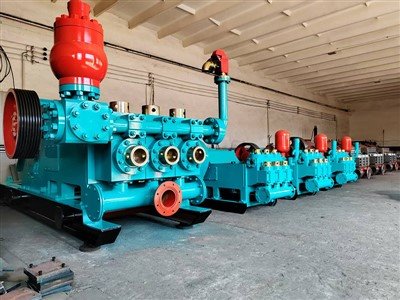
Circulation system is how you keep the drill bit cool and carry cut rock out of the hole—this is called mud rotary drilling, by the way, which is the most common method. The specs here are the mud pump flow rate and pressure. A good mud pump needs at least 10 GPM to keep mud moving fast enough to carry rock chips up the borehole; pressure of 150–250 PSI is standard for most jobs. If the pump is too weak, you’ll get cuttings stuck at the bottom, which slows drilling to a crawl. Some rigs also have air rotary systems for very deep or hard rock, but that’s a more specialized add-on, not a base spec most casual buyers need.
Wait, let’s not forget control systems. Old rigs used manual levers, but new ones have basic digital controls now. Digital controls make it easier to adjust torque, pullback, and mud flow on the fly, which reduces human error. For example, if you hit a layer of granite, you can crank up torque without fumbling with a manual valve. They also have depth counters built-in, so you don’t have to count drill pipe marks (another thing that saves time). That said, you don’t need a $100k rig with a full touchscreen dashboard—basic digital controls on mid-sized rigs are more than enough for most work.
Now, let’s be real—no spec sheet tells the whole story. I’ve seen two rigs with identical depth specs that perform totally different because one has a better hydraulic system or higher-quality drill pipe. That’s why when we work with customers, we don’t just hand over a spec list—we ask them about their typical jobs, how many wells they drill a year, what terrain they’re working on, and what their budget is. For example, a guy drilling 10 residential wells a year in flat Ohio doesn’t need a 3,000-foot tracked rig—he’ll overpay for power he’ll never use. A company drilling 50+ agricultural wells in West Texas needs that heavy-duty rig, because hard rock and deep depths will kill a small portable rig fast.

If you’re in the market, here’s the hard truth: buying a water well drilling rig is a big investment, not a tool you replace every year. Don’t chase the lowest price—chase the rig whose specs match your actual work. I’ve seen guys buy a cheap portable rig because it was $10k less, then spend $20k in repairs in the first year because it couldn’t handle 500 feet of hard rock. It’s not worth it.
Water Well Drill Pipe At the end of the day, the technical specs are the blueprint, but what matters is how they work for your jobs. If you’re ready to talk through what you actually need—no sales pitch, just honest answers about depth, terrain, and how many wells you’re planning to do—hit us up to connect. We can walk through our lineup, adjust specs to fit your budget, and even send a specialist out to your area to check job sites if needed. No pressure, just real advice from someone who’s been in this game long enough to know what works and what doesn’t.
References
- Water Well Drilling Rigs: Selection, Operation, and Maintenance. National Ground Water Association, 2021.
- Hydraulic Systems for Industrial Drilling Equipment. Society of Petroleum Engineers, 2019.
- Portable Drilling Rig Mobility and Site Requirements. American Society of Agricultural and Biological Engineers, 2020.
Hebei Zhongxin Machinery Equipment Co., Ltd.
As one of the most experienced water well drilling rig manufacturers in China, we also support customized service. We warmly welcome you to buy high quality water well drilling rig for sale here from our factory. If you have any enquiry about pricelist, please feel free to email us.
Address: Wangxizhang Industrial Zone, Zhao County, Shijiazhuang City, Hebei Province, China
E-mail: zxnjbzg@163.com
WebSite: https://www.hbzxdrilling.com/
